The Autonomic Nervous System: A Complete Guide to How Your Body Runs on Autopilot
Everything you need to know about the system that controls your heartbeat, digestion, and stress response without your conscious input.
What Is The Autonomic Nervous System?
Research published in the journal Psychophysiology (2019) demonstrated that individuals with higher vagal tone — a measure of parasympathetic activity — showed faster emotional recovery after viewing distressing images. These participants returned to baseline heart rate 40% faster than those with lower vagal tone, suggesting that the parasympathetic system acts as a built-in resilience mechanism.
Somatic experiencing, developed by Peter Levine, is based on the observation that wild animals routinely discharge stress energy through physical movement — shaking, trembling, running — and rarely develop trauma-like symptoms. Humans, by contrast, often suppress these natural discharge mechanisms due to social conditioning. Somatic experiencing works by gently guiding individuals to complete interrupted defensive responses and discharge accumulated survival energy from the body.
One practical implication of this research that is often overlooked is the importance of transitional rituals — deliberate practices that mark the boundary between different states of activation. The morning commute, the lunch break, the evening decompression — these transitional periods serve a neurological function by allowing the nervous system to shift between different modes of operation. The erosion of these boundaries in remote work culture, where the laptop opens on the nightstand and closes on the couch, has eliminated many of the natural regulation points that previously structured the day. Deliberately creating transitional rituals (a 10-minute walk between work and dinner, a specific 'shutdown' routine at end of work, different physical spaces for different activities) can significantly improve nervous system regulation even without adding formal 'practices.'
Chronotype — your natural preference for morning or evening activity — is genetically determined and shifts across the lifespan. Research published in Current Biology (2019) identified nearly 400 genetic variants associated with chronotype. Adolescents naturally shift toward later chronotypes (explaining why teens struggle with early school start times), while older adults tend to shift earlier. Forcing yourself to operate against your chronotype has measurable health consequences: a UK Biobank study of 430,000 people found that evening chronotypes forced to wake early had a 10% higher mortality risk.
The bidirectional relationship between sleep and the immune system is mediated by cytokines — signaling molecules that promote inflammation and immune activation. When you're fighting an infection, pro-inflammatory cytokines like interleukin-1 and tumor necrosis factor increase slow-wave sleep, which is why you feel so sleepy when sick. Conversely, chronic sleep deprivation increases pro-inflammatory cytokine levels even in the absence of infection, creating a state of low-grade systemic inflammation associated with cardiovascular disease, diabetes, and depression.
The Science Behind It
Chronic sympathetic activation creates a cascade of downstream effects that extend far beyond the subjective experience of feeling stressed. Elevated cortisol suppresses immune function, disrupts sleep architecture, impairs memory consolidation in the hippocampus, and promotes visceral fat storage. A landmark study in the Proceedings of the National Academy of Sciences (2004) found that chronic psychological stress was associated with shorter telomere length — essentially accelerating biological aging at the cellular level.
Interoception — the ability to sense internal bodily signals — is increasingly recognized as foundational to emotional regulation. Research published in Biological Psychology (2019) found that individuals with poor interoceptive accuracy were more likely to experience anxiety disorders and had greater difficulty identifying and labeling their emotions. This suggests that learning to sense your own heartbeat, breathing patterns, and gut signals may be as important as any cognitive therapy technique.
Recent advances in wearable technology have made it possible for individuals to track their own nervous system state in real time. Devices measuring HRV, electrodermal activity (skin conductance), and continuous heart rate provide biofeedback that was previously available only in clinical settings. Research from the University of Zurich (2020) found that HRV biofeedback training — where individuals learn to increase their HRV in real time using visual or auditory feedback — produced significant improvements in anxiety, depression, and stress resilience that were maintained at six-month follow-up. While these tools are not replacements for professional care, they democratize access to physiological self-awareness.
The distinction between stress and anxiety is both neurological and temporal. Stress is a response to an identifiable external stimulus — a deadline, a conflict, a financial setback. Anxiety, by contrast, is the persistence of the stress response in the absence of an immediate threat. Neuroimaging research from the National Institute of Mental Health has shown that anxiety involves hyperactivity in the amygdala and anterior insula even when no threat is present, suggesting that the brain's threat-detection system is firing inappropriately.
Chronotype — your natural preference for morning or evening activity — is genetically determined and shifts across the lifespan. Research published in Current Biology (2019) identified nearly 400 genetic variants associated with chronotype. Adolescents naturally shift toward later chronotypes (explaining why teens struggle with early school start times), while older adults tend to shift earlier. Forcing yourself to operate against your chronotype has measurable health consequences: a UK Biobank study of 430,000 people found that evening chronotypes forced to wake early had a 10% higher mortality risk.
You cannot think your way out of a body-based stress response. The body must be involved in the solution.
How It Affects Your Nervous System
Interoception — the ability to sense internal bodily signals — is increasingly recognized as foundational to emotional regulation. Research published in Biological Psychology (2019) found that individuals with poor interoceptive accuracy were more likely to experience anxiety disorders and had greater difficulty identifying and labeling their emotions. This suggests that learning to sense your own heartbeat, breathing patterns, and gut signals may be as important as any cognitive therapy technique.
The polyvagal theory proposes a hierarchical model of autonomic states. The most evolutionarily recent system — the ventral vagal complex — supports social engagement, connection, and calm alertness. When this system is active, we can communicate effectively, think clearly, and feel safe. The sympathetic system, the next layer, mobilizes us for fight or flight. The oldest system — the dorsal vagal complex — triggers freeze and shutdown. Effective regulation involves strengthening ventral vagal tone so that it becomes the default state.
The concept of 'dose-response' in regulation practices is important and often overlooked. Just as medication has an optimal dose range — below which it's ineffective and above which side effects emerge — regulation practices have optimal duration and intensity parameters. Research from Emory University (2019) found that meditation sessions of 10-20 minutes produced the greatest anxiolytic effects, with diminishing returns beyond 30 minutes and some participants actually reporting increased anxiety during sessions longer than 45 minutes (likely due to sustained interoceptive focus amplifying anxious body sensations in untrained practitioners). Starting with shorter sessions and gradually increasing is both safer and more sustainable.
The inner critic, when examined neurologically, activates the same threat-response circuits as an external threat. Research from the University of Exeter (2017) using fMRI showed that self-critical thinking activated the amygdala and the lateral prefrontal cortex (associated with behavioral inhibition), while self-compassionate thinking activated the insula (interoception) and the ventral striatum (reward). This suggests that self-criticism keeps the nervous system in a defensive posture, while self-compassion promotes safety and regulation.
What the Research Shows
The enteric nervous system, sometimes called the 'second brain,' contains over 500 million neurons lining the gastrointestinal tract. This neural network communicates bidirectionally with the central nervous system via the vagus nerve, which is why stress so commonly manifests as digestive symptoms. Research from the Alimentary Pharmabiotic Centre at University College Cork has demonstrated that gut microbiota composition directly influences vagal signaling and, consequently, stress reactivity and mood.
The hypothalamic-pituitary-adrenal (HPA) axis is the primary neuroendocrine stress response system. When the hypothalamus detects a threat, it releases corticotropin-releasing hormone (CRH), which stimulates the pituitary gland to release adrenocorticotropic hormone (ACTH), which in turn triggers cortisol release from the adrenal glands. Chronic activation of this axis — as occurs in persistent stress — leads to HPA axis dysregulation, characterized by either chronically elevated cortisol or, paradoxically, blunted cortisol responses (as seen in burnout and certain trauma presentations).
The concept of 'dose-response' in regulation practices is important and often overlooked. Just as medication has an optimal dose range — below which it's ineffective and above which side effects emerge — regulation practices have optimal duration and intensity parameters. Research from Emory University (2019) found that meditation sessions of 10-20 minutes produced the greatest anxiolytic effects, with diminishing returns beyond 30 minutes and some participants actually reporting increased anxiety during sessions longer than 45 minutes (likely due to sustained interoceptive focus amplifying anxious body sensations in untrained practitioners). Starting with shorter sessions and gradually increasing is both safer and more sustainable.
Chronic sympathetic activation creates a cascade of downstream effects that extend far beyond the subjective experience of feeling stressed. Elevated cortisol suppresses immune function, disrupts sleep architecture, impairs memory consolidation in the hippocampus, and promotes visceral fat storage. A landmark study in the Proceedings of the National Academy of Sciences (2004) found that chronic psychological stress was associated with shorter telomere length — essentially accelerating biological aging at the cellular level.
The intersection of nervous system science and traditional healing practices is an area of growing academic interest. Many traditional practices — including yoga, tai chi, chanting, drumming, sweat lodges, and cold water immersion — have been practiced for centuries or millennia and are now being validated by modern neuroscience. A 2018 review in the Annals of the New York Academy of Sciences found that traditional mind-body practices consistently improved vagal tone, reduced inflammatory markers, and enhanced emotional regulation — often through mechanisms that their original practitioners could not have articulated in modern scientific terms but clearly understood experientially.
Common Misconceptions
The vagus nerve, the longest cranial nerve in the body, serves as the primary conduit for parasympathetic signals. Running from the brainstem through the neck, chest, and abdomen, it innervates the heart, lungs, and digestive tract. When the vagus nerve fires, heart rate decreases, breathing deepens, digestion activates, and inflammatory markers drop. This is why vagal stimulation techniques have become a cornerstone of nervous system regulation practice.
Chronic sympathetic activation creates a cascade of downstream effects that extend far beyond the subjective experience of feeling stressed. Elevated cortisol suppresses immune function, disrupts sleep architecture, impairs memory consolidation in the hippocampus, and promotes visceral fat storage. A landmark study in the Proceedings of the National Academy of Sciences (2004) found that chronic psychological stress was associated with shorter telomere length — essentially accelerating biological aging at the cellular level.
Sleep remains the single most potent nervous system regulation intervention available, yet it is consistently the most neglected. During sleep — particularly during slow-wave and REM stages — the brain undergoes critical maintenance processes: clearing metabolic waste through the glymphatic system, consolidating memories, processing emotional experiences, recalibrating stress hormones, and repairing cellular damage. The research is unequivocal: there is no aspect of physical or mental health that is not impaired by insufficient sleep, and no amount of other regulation practices can compensate for chronic sleep deprivation. Prioritizing sleep is not optional — it is the foundation upon which all other regulation efforts rest.
People-pleasing, when viewed through a nervous system lens, is a fawn response — a trauma adaptation in which an individual prioritizes others' needs to maintain safety. Unlike fight, flight, or freeze, fawning involves actively managing another person's emotional state to prevent conflict or rejection. Research from the University of Michigan (2017) found that chronic people-pleasing was associated with elevated cortisol throughout the day, suggesting that the constant vigilance required to anticipate and meet others' needs maintains sympathetic nervous system activation.
If you frequently feel both wired and tired at the same time, you may be experiencing a mixed sympathetic-dorsal vagal state. This common pattern responds well to gentle bilateral stimulation, such as alternating tapping on your knees while breathing slowly.
Practical Applications
The window of tolerance, a concept developed by Daniel Siegel, describes the optimal zone of arousal in which a person can function effectively. Within this window, emotions can be experienced and managed without becoming overwhelming. Above the window lies hyperarousal (anxiety, panic, rage), and below lies hypoarousal (numbness, dissociation, collapse). The goal of nervous system regulation is not to eliminate stress but to widen this window so that a broader range of experiences can be tolerated without dysregulation.
Interoception — the ability to sense internal bodily signals — is increasingly recognized as foundational to emotional regulation. Research published in Biological Psychology (2019) found that individuals with poor interoceptive accuracy were more likely to experience anxiety disorders and had greater difficulty identifying and labeling their emotions. This suggests that learning to sense your own heartbeat, breathing patterns, and gut signals may be as important as any cognitive therapy technique.
The concept of 'dose-response' in regulation practices is important and often overlooked. Just as medication has an optimal dose range — below which it's ineffective and above which side effects emerge — regulation practices have optimal duration and intensity parameters. Research from Emory University (2019) found that meditation sessions of 10-20 minutes produced the greatest anxiolytic effects, with diminishing returns beyond 30 minutes and some participants actually reporting increased anxiety during sessions longer than 45 minutes (likely due to sustained interoceptive focus amplifying anxious body sensations in untrained practitioners). Starting with shorter sessions and gradually increasing is both safer and more sustainable.
The intersection of nervous system science and traditional healing practices is an area of growing academic interest. Many traditional practices — including yoga, tai chi, chanting, drumming, sweat lodges, and cold water immersion — have been practiced for centuries or millennia and are now being validated by modern neuroscience. A 2018 review in the Annals of the New York Academy of Sciences found that traditional mind-body practices consistently improved vagal tone, reduced inflammatory markers, and enhanced emotional regulation — often through mechanisms that their original practitioners could not have articulated in modern scientific terms but clearly understood experientially.
The polyvagal theory proposes a hierarchical model of autonomic states. The most evolutionarily recent system — the ventral vagal complex — supports social engagement, connection, and calm alertness. When this system is active, we can communicate effectively, think clearly, and feel safe. The sympathetic system, the next layer, mobilizes us for fight or flight. The oldest system — the dorsal vagal complex — triggers freeze and shutdown. Effective regulation involves strengthening ventral vagal tone so that it becomes the default state.
The Mind-Body Connection
Heart rate variability (HRV) has emerged as one of the most reliable biomarkers for nervous system flexibility. Unlike resting heart rate, which tells you how fast your heart beats, HRV measures the variation in time between successive heartbeats. Higher HRV indicates greater parasympathetic influence and is associated with better emotional regulation, cognitive flexibility, and stress resilience. Research from the HeartMath Institute has shown that even brief coherence practices can measurably improve HRV within minutes.
The enteric nervous system, sometimes called the 'second brain,' contains over 500 million neurons lining the gastrointestinal tract. This neural network communicates bidirectionally with the central nervous system via the vagus nerve, which is why stress so commonly manifests as digestive symptoms. Research from the Alimentary Pharmabiotic Centre at University College Cork has demonstrated that gut microbiota composition directly influences vagal signaling and, consequently, stress reactivity and mood.
One practical implication of this research that is often overlooked is the importance of transitional rituals — deliberate practices that mark the boundary between different states of activation. The morning commute, the lunch break, the evening decompression — these transitional periods serve a neurological function by allowing the nervous system to shift between different modes of operation. The erosion of these boundaries in remote work culture, where the laptop opens on the nightstand and closes on the couch, has eliminated many of the natural regulation points that previously structured the day. Deliberately creating transitional rituals (a 10-minute walk between work and dinner, a specific 'shutdown' routine at end of work, different physical spaces for different activities) can significantly improve nervous system regulation even without adding formal 'practices.'
Chronotype — your natural preference for morning or evening activity — is genetically determined and shifts across the lifespan. Research published in Current Biology (2019) identified nearly 400 genetic variants associated with chronotype. Adolescents naturally shift toward later chronotypes (explaining why teens struggle with early school start times), while older adults tend to shift earlier. Forcing yourself to operate against your chronotype has measurable health consequences: a UK Biobank study of 430,000 people found that evening chronotypes forced to wake early had a 10% higher mortality risk.
Who Benefits Most
Chronic sympathetic activation creates a cascade of downstream effects that extend far beyond the subjective experience of feeling stressed. Elevated cortisol suppresses immune function, disrupts sleep architecture, impairs memory consolidation in the hippocampus, and promotes visceral fat storage. A landmark study in the Proceedings of the National Academy of Sciences (2004) found that chronic psychological stress was associated with shorter telomere length — essentially accelerating biological aging at the cellular level.
The window of tolerance, a concept developed by Daniel Siegel, describes the optimal zone of arousal in which a person can function effectively. Within this window, emotions can be experienced and managed without becoming overwhelming. Above the window lies hyperarousal (anxiety, panic, rage), and below lies hypoarousal (numbness, dissociation, collapse). The goal of nervous system regulation is not to eliminate stress but to widen this window so that a broader range of experiences can be tolerated without dysregulation.
One practical implication of this research that is often overlooked is the importance of transitional rituals — deliberate practices that mark the boundary between different states of activation. The morning commute, the lunch break, the evening decompression — these transitional periods serve a neurological function by allowing the nervous system to shift between different modes of operation. The erosion of these boundaries in remote work culture, where the laptop opens on the nightstand and closes on the couch, has eliminated many of the natural regulation points that previously structured the day. Deliberately creating transitional rituals (a 10-minute walk between work and dinner, a specific 'shutdown' routine at end of work, different physical spaces for different activities) can significantly improve nervous system regulation even without adding formal 'practices.'
Rumination — repetitive, circular thinking about problems or distressing events — is one of the strongest predictors of depression and anxiety. Research from Stanford University (2013) using fMRI showed that rumination involves hyperactivation of the default mode network, particularly the subgenual prefrontal cortex, a region strongly implicated in depression. Importantly, rumination is not problem-solving — it does not lead to insight or resolution. Instead, it amplifies negative affect and strengthens the neural pathways associated with distress.
Getting Started: A Step-by-Step Guide
Co-regulation — the process by which one person's regulated nervous system helps another person regulate — is not limited to parent-child relationships. Research from the University of Virginia (2020) demonstrated that romantic partners' cortisol levels synchronize within 20 minutes of physical proximity. Similarly, studies of group breathwork sessions show collective heart rate variability coherence, suggesting that nervous system states are genuinely contagious.
Somatic experiencing, developed by Peter Levine, is based on the observation that wild animals routinely discharge stress energy through physical movement — shaking, trembling, running — and rarely develop trauma-like symptoms. Humans, by contrast, often suppress these natural discharge mechanisms due to social conditioning. Somatic experiencing works by gently guiding individuals to complete interrupted defensive responses and discharge accumulated survival energy from the body.
For those beginning to explore this territory, the sheer volume of information can itself become overwhelming — paradoxically adding another source of stress. A useful framework is to start with one practice that addresses your most prominent symptom. If your primary issue is racing thoughts, begin with breathwork. If it's physical tension, start with progressive muscle relaxation or somatic movement. If it's emotional reactivity, try a brief daily mindfulness practice. The evidence consistently shows that any single regulation practice, done consistently, produces downstream benefits across multiple domains. You don't need to do everything — you need to do one thing reliably.
The polyvagal theory proposes a hierarchical model of autonomic states. The most evolutionarily recent system — the ventral vagal complex — supports social engagement, connection, and calm alertness. When this system is active, we can communicate effectively, think clearly, and feel safe. The sympathetic system, the next layer, mobilizes us for fight or flight. The oldest system — the dorsal vagal complex — triggers freeze and shutdown. Effective regulation involves strengthening ventral vagal tone so that it becomes the default state.
Common Mistakes to Avoid
Somatic experiencing, developed by Peter Levine, is based on the observation that wild animals routinely discharge stress energy through physical movement — shaking, trembling, running — and rarely develop trauma-like symptoms. Humans, by contrast, often suppress these natural discharge mechanisms due to social conditioning. Somatic experiencing works by gently guiding individuals to complete interrupted defensive responses and discharge accumulated survival energy from the body.
Chronic sympathetic activation creates a cascade of downstream effects that extend far beyond the subjective experience of feeling stressed. Elevated cortisol suppresses immune function, disrupts sleep architecture, impairs memory consolidation in the hippocampus, and promotes visceral fat storage. A landmark study in the Proceedings of the National Academy of Sciences (2004) found that chronic psychological stress was associated with shorter telomere length — essentially accelerating biological aging at the cellular level.
The vagus nerve's role extends far beyond what most popular accounts describe. In addition to its well-known effects on heart rate and digestion, the vagus nerve modulates the inflammatory reflex (reducing systemic inflammation), influences pain processing, regulates glucose metabolism, and even affects social cognition through its connections to facial muscles and middle ear structures involved in detecting prosodic (emotional) features of speech. Research from the Feinstein Institutes for Medical Research has demonstrated that electrical stimulation of the vagus nerve can reduce TNF-alpha (a key inflammatory cytokine) by up to 50%, which has led to FDA-approved vagus nerve stimulation devices for treatment-resistant depression and epilepsy.
Napping science reveals a nuanced picture. A NASA study on military pilots and astronauts found that a 26-minute nap improved performance by 34% and alertness by 54%. However, naps longer than 30 minutes carry the risk of sleep inertia — grogginess caused by waking from deeper sleep stages. The optimal nap length depends on the goal: 10-20 minutes for alertness, 60 minutes for cognitive memory processing (with potential grogginess), or 90 minutes for a full sleep cycle including REM (mood and creativity benefits).
When to Seek Professional Help
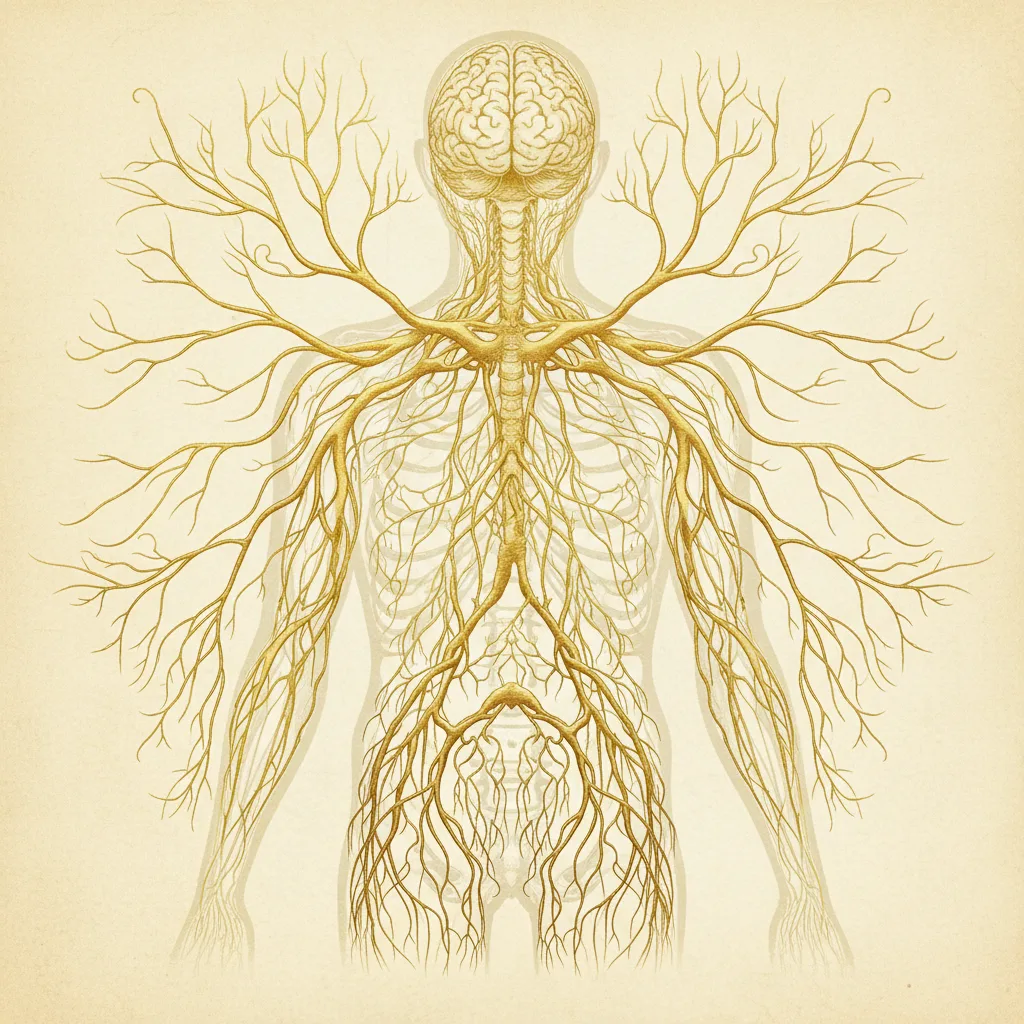
The autonomic nervous system operates largely below conscious awareness, governing heart rate, digestion, respiratory rate, pupillary response, urination, and sexual arousal. It consists of two primary branches: the sympathetic nervous system, which mobilizes the body for action, and the parasympathetic nervous system, which promotes rest, recovery, and digestion. Understanding this fundamental division is the first step toward meaningful nervous system regulation.
Chronic sympathetic activation creates a cascade of downstream effects that extend far beyond the subjective experience of feeling stressed. Elevated cortisol suppresses immune function, disrupts sleep architecture, impairs memory consolidation in the hippocampus, and promotes visceral fat storage. A landmark study in the Proceedings of the National Academy of Sciences (2004) found that chronic psychological stress was associated with shorter telomere length — essentially accelerating biological aging at the cellular level.
Recent advances in wearable technology have made it possible for individuals to track their own nervous system state in real time. Devices measuring HRV, electrodermal activity (skin conductance), and continuous heart rate provide biofeedback that was previously available only in clinical settings. Research from the University of Zurich (2020) found that HRV biofeedback training — where individuals learn to increase their HRV in real time using visual or auditory feedback — produced significant improvements in anxiety, depression, and stress resilience that were maintained at six-month follow-up. While these tools are not replacements for professional care, they democratize access to physiological self-awareness.
Caffeine's relationship with anxiety is dose-dependent and highly individual, influenced by genetic variations in the CYP1A2 enzyme that metabolizes caffeine. Fast metabolizers (about 50% of the population) can consume moderate caffeine without significant anxiety effects, while slow metabolizers may experience jitteriness, increased heart rate, and panic-like symptoms from as little as 100mg (one cup of coffee). Research published in Neuropsychopharmacology (2005) found that caffeine at doses above 200mg significantly increased cortisol secretion in habitual consumers, challenging the common belief that tolerance eliminates caffeine's stress effects.
Vitamin D deficiency affects an estimated one billion people worldwide and has been consistently associated with depression and anxiety in observational studies. Vitamin D receptors are found throughout the brain, including in regions involved in mood regulation (hippocampus, prefrontal cortex, amygdala). A 2020 meta-analysis in Critical Reviews in Food Science and Nutrition found that vitamin D supplementation significantly reduced depressive symptoms in deficient individuals, with the strongest effects observed at doses of 2000-4000 IU daily over 8-12 weeks.
Putting It All Together
The window of tolerance, a concept developed by Daniel Siegel, describes the optimal zone of arousal in which a person can function effectively. Within this window, emotions can be experienced and managed without becoming overwhelming. Above the window lies hyperarousal (anxiety, panic, rage), and below lies hypoarousal (numbness, dissociation, collapse). The goal of nervous system regulation is not to eliminate stress but to widen this window so that a broader range of experiences can be tolerated without dysregulation.
The polyvagal theory proposes a hierarchical model of autonomic states. The most evolutionarily recent system — the ventral vagal complex — supports social engagement, connection, and calm alertness. When this system is active, we can communicate effectively, think clearly, and feel safe. The sympathetic system, the next layer, mobilizes us for fight or flight. The oldest system — the dorsal vagal complex — triggers freeze and shutdown. Effective regulation involves strengthening ventral vagal tone so that it becomes the default state.
Sleep remains the single most potent nervous system regulation intervention available, yet it is consistently the most neglected. During sleep — particularly during slow-wave and REM stages — the brain undergoes critical maintenance processes: clearing metabolic waste through the glymphatic system, consolidating memories, processing emotional experiences, recalibrating stress hormones, and repairing cellular damage. The research is unequivocal: there is no aspect of physical or mental health that is not impaired by insufficient sleep, and no amount of other regulation practices can compensate for chronic sleep deprivation. Prioritizing sleep is not optional — it is the foundation upon which all other regulation efforts rest.
The autonomic nervous system operates largely below conscious awareness, governing heart rate, digestion, respiratory rate, pupillary response, urination, and sexual arousal. It consists of two primary branches: the sympathetic nervous system, which mobilizes the body for action, and the parasympathetic nervous system, which promotes rest, recovery, and digestion. Understanding this fundamental division is the first step toward meaningful nervous system regulation.
Emotional flashbacks, a term coined by Pete Walker, differ from the visual flashbacks typically associated with PTSD. Rather than re-experiencing specific traumatic events, emotional flashbacks involve sudden regressions to the emotional state of childhood trauma — overwhelming fear, shame, helplessness, or rage — often without an identifiable trigger. Research published in the Journal of Traumatic Stress (2014) found that emotional flashbacks are a primary feature of complex PTSD and are mediated by implicit (non-verbal) memory systems that bypass conscious recall.
Sources & Further Reading
- Thayer, J.F., & Lane, R.D. (2009). Claude Bernard and the heart-brain connection: Further elaboration of a model of neurovisceral integration. Neuroscience & Biobehavioral Reviews, 33(2), 81-88.
- Laborde, S., Mosley, E., & Thayer, J.F. (2017). Heart rate variability and cardiac vagal tone in psychophysiological research. Frontiers in Psychology, 8, 213.
- van der Kolk, B. (2014). The Body Keeps the Score: Brain, Mind, and Body in the Healing of Trauma. Viking.
- Levine, P.A. (2010). In an Unspoken Voice: How the Body Releases Trauma and Restores Goodness. North Atlantic Books.
- Epel, E.S., et al. (2004). Accelerated telomere shortening in response to life stress. Proceedings of the National Academy of Sciences, 101(49), 17312-17315.