Emotional Regulation Skills: A Neuroscience-Based Toolkit
Practical skills for managing emotional intensity without suppression or avoidance.

What Is Emotional Regulation Skills?
Somatic experiencing, developed by Peter Levine, is based on the observation that wild animals routinely discharge stress energy through physical movement — shaking, trembling, running — and rarely develop trauma-like symptoms. Humans, by contrast, often suppress these natural discharge mechanisms due to social conditioning. Somatic experiencing works by gently guiding individuals to complete interrupted defensive responses and discharge accumulated survival energy from the body.
The hypothalamic-pituitary-adrenal (HPA) axis is the primary neuroendocrine stress response system. When the hypothalamus detects a threat, it releases corticotropin-releasing hormone (CRH), which stimulates the pituitary gland to release adrenocorticotropic hormone (ACTH), which in turn triggers cortisol release from the adrenal glands. Chronic activation of this axis — as occurs in persistent stress — leads to HPA axis dysregulation, characterized by either chronically elevated cortisol or, paradoxically, blunted cortisol responses (as seen in burnout and certain trauma presentations).
What makes this area of research particularly compelling is the convergence of evidence from multiple disciplines. Neuroscientists, immunologists, endocrinologists, and psychologists are all arriving at the same conclusion from different angles: chronic stress is not merely a psychological experience but a whole-body physiological state with measurable consequences across every organ system. This interdisciplinary consensus represents a significant departure from the historical tendency to treat mental and physical health as separate domains. The implications for clinical practice are profound — effective treatment must address both the psychological and physiological dimensions of dysregulation.
Burnout, as defined by the World Health Organization in 2019, is specifically an occupational phenomenon characterized by three dimensions: emotional exhaustion, depersonalization (cynicism toward work), and reduced personal accomplishment. Research from the Karolinska Institute in Sweden has shown that burnout is associated with measurable changes in brain structure — specifically, thinning of the prefrontal cortex and enlargement of the amygdala — changes that mirror those seen in chronic stress and early trauma.
This finding aligns with a broader pattern in psychophysiology research: the body's regulatory systems are not fixed but remarkably plastic. When provided with consistent, appropriate inputs — whether through breathwork, movement, social connection, or nutritional support — the nervous system can recalibrate toward more adaptive baseline states. The key word here is 'consistent.' Single interventions produce temporary shifts; sustained practice produces lasting change. Research from the University of Wisconsin's Center for Healthy Minds has demonstrated that as little as two weeks of daily practice can produce detectable changes in neural connectivity, with more substantial structural changes emerging after eight to twelve weeks.
The Science Behind It
Neuroplasticity research has demonstrated that the brain's stress circuits are not fixed. A 2018 study in Nature Neuroscience showed that even adults who had experienced significant childhood adversity could develop new neural pathways through consistent regulation practices. The prefrontal cortex — responsible for executive function and emotional regulation — showed measurable thickening after just eight weeks of mindfulness-based stress reduction (MBSR), as documented by researchers at Harvard Medical School.
Research published in the journal Psychophysiology (2019) demonstrated that individuals with higher vagal tone — a measure of parasympathetic activity — showed faster emotional recovery after viewing distressing images. These participants returned to baseline heart rate 40% faster than those with lower vagal tone, suggesting that the parasympathetic system acts as a built-in resilience mechanism.
This finding aligns with a broader pattern in psychophysiology research: the body's regulatory systems are not fixed but remarkably plastic. When provided with consistent, appropriate inputs — whether through breathwork, movement, social connection, or nutritional support — the nervous system can recalibrate toward more adaptive baseline states. The key word here is 'consistent.' Single interventions produce temporary shifts; sustained practice produces lasting change. Research from the University of Wisconsin's Center for Healthy Minds has demonstrated that as little as two weeks of daily practice can produce detectable changes in neural connectivity, with more substantial structural changes emerging after eight to twelve weeks.
Interoception — the ability to sense internal bodily signals — is increasingly recognized as foundational to emotional regulation. Research published in Biological Psychology (2019) found that individuals with poor interoceptive accuracy were more likely to experience anxiety disorders and had greater difficulty identifying and labeling their emotions. This suggests that learning to sense your own heartbeat, breathing patterns, and gut signals may be as important as any cognitive therapy technique.
Healing is not linear because the nervous system doesn't operate on a timeline. It operates on a threshold of safety.
How It Affects Your Nervous System
The enteric nervous system, sometimes called the 'second brain,' contains over 500 million neurons lining the gastrointestinal tract. This neural network communicates bidirectionally with the central nervous system via the vagus nerve, which is why stress so commonly manifests as digestive symptoms. Research from the Alimentary Pharmabiotic Centre at University College Cork has demonstrated that gut microbiota composition directly influences vagal signaling and, consequently, stress reactivity and mood.
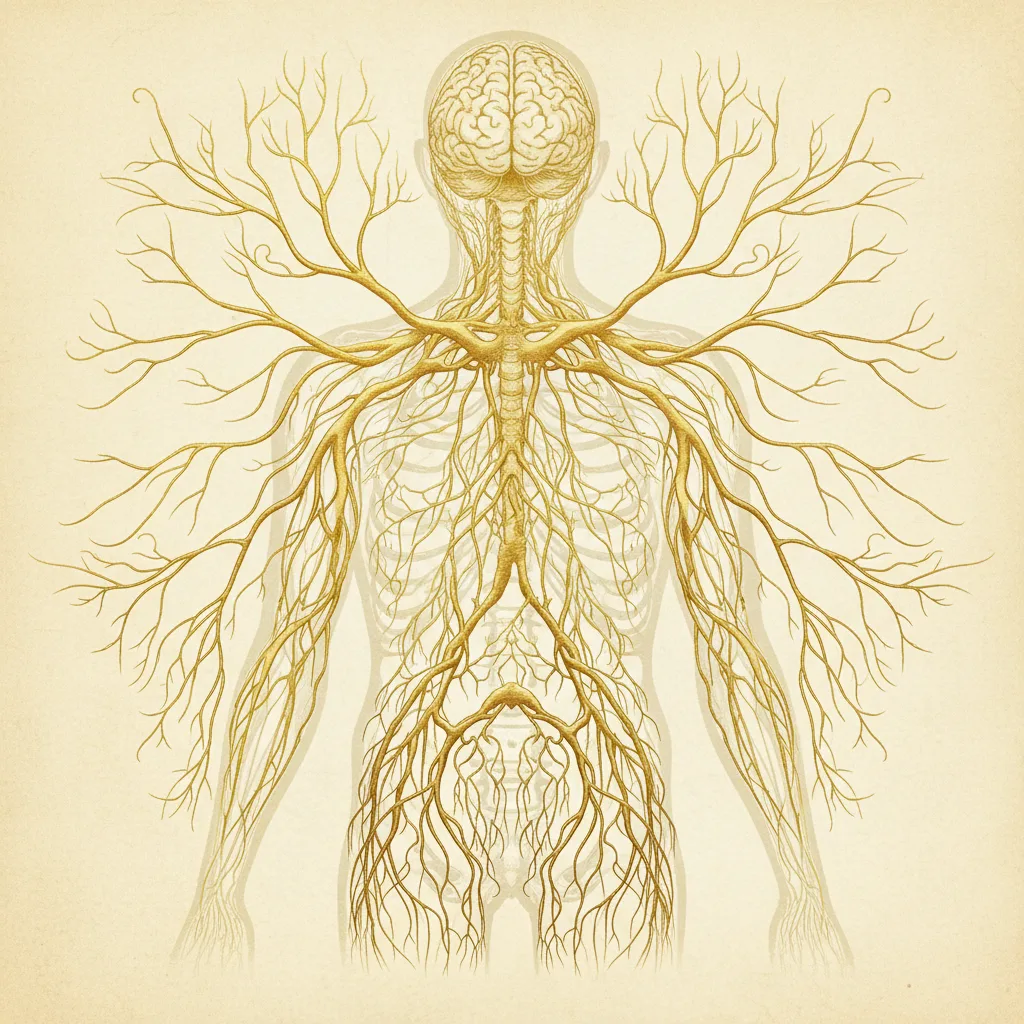
The vagus nerve, the longest cranial nerve in the body, serves as the primary conduit for parasympathetic signals. Running from the brainstem through the neck, chest, and abdomen, it innervates the heart, lungs, and digestive tract. When the vagus nerve fires, heart rate decreases, breathing deepens, digestion activates, and inflammatory markers drop. This is why vagal stimulation techniques have become a cornerstone of nervous system regulation practice.
The intersection of nervous system science and traditional healing practices is an area of growing academic interest. Many traditional practices — including yoga, tai chi, chanting, drumming, sweat lodges, and cold water immersion — have been practiced for centuries or millennia and are now being validated by modern neuroscience. A 2018 review in the Annals of the New York Academy of Sciences found that traditional mind-body practices consistently improved vagal tone, reduced inflammatory markers, and enhanced emotional regulation — often through mechanisms that their original practitioners could not have articulated in modern scientific terms but clearly understood experientially.
Screen time affects the nervous system through multiple pathways. The blue light emitted by screens suppresses melatonin production, but the more significant impact is attentional: the rapid-fire stimulation of social media, news, and notifications keeps the brain in a state of sustained partial attention — a low-level sympathetic activation that prevents deep relaxation even when the content being consumed is not inherently stressful.
Anticipatory anxiety — worrying about future events — activates the same neural circuits as actual threat exposure. Research published in Science (2006) demonstrated that the anterior insula, a brain region involved in processing aversive experiences, showed equal activation whether participants were experiencing mild electric shocks or merely anticipating them. This finding explains why anticipatory anxiety feels so physically real and why rationalization alone is often insufficient to resolve it.
What the Research Shows
Neuroplasticity research has demonstrated that the brain's stress circuits are not fixed. A 2018 study in Nature Neuroscience showed that even adults who had experienced significant childhood adversity could develop new neural pathways through consistent regulation practices. The prefrontal cortex — responsible for executive function and emotional regulation — showed measurable thickening after just eight weeks of mindfulness-based stress reduction (MBSR), as documented by researchers at Harvard Medical School.
The vagus nerve, the longest cranial nerve in the body, serves as the primary conduit for parasympathetic signals. Running from the brainstem through the neck, chest, and abdomen, it innervates the heart, lungs, and digestive tract. When the vagus nerve fires, heart rate decreases, breathing deepens, digestion activates, and inflammatory markers drop. This is why vagal stimulation techniques have become a cornerstone of nervous system regulation practice.
The temporal dynamics of nervous system regulation are worth understanding. After a stressful event, the body's return to baseline follows a predictable trajectory: heart rate recovers first (within minutes), followed by blood pressure (within 10-20 minutes), followed by cortisol (within 60-90 minutes), followed by inflammatory markers (within hours to days). This means that feeling 'calm' after a stress event does not necessarily mean your body has fully recovered — cortisol and inflammatory markers may remain elevated long after subjective distress has resolved. This is why post-stress recovery practices (gentle movement, social connection, adequate sleep) are important even when you 'feel fine.'
Magnesium is involved in over 300 enzymatic reactions in the body, including many that directly influence nervous system function. It serves as a natural calcium channel blocker, modulating the excitability of neurons. Research published in Nutrients (2017) found that magnesium supplementation significantly reduced subjective anxiety in moderately anxious individuals, with effects comparable to low-dose pharmaceutical anxiolytics. The most bioavailable forms — magnesium glycinate, threonate, and taurate — are preferred over magnesium oxide, which has poor absorption.
Common Misconceptions
Neuroplasticity research has demonstrated that the brain's stress circuits are not fixed. A 2018 study in Nature Neuroscience showed that even adults who had experienced significant childhood adversity could develop new neural pathways through consistent regulation practices. The prefrontal cortex — responsible for executive function and emotional regulation — showed measurable thickening after just eight weeks of mindfulness-based stress reduction (MBSR), as documented by researchers at Harvard Medical School.
Heart rate variability (HRV) has emerged as one of the most reliable biomarkers for nervous system flexibility. Unlike resting heart rate, which tells you how fast your heart beats, HRV measures the variation in time between successive heartbeats. Higher HRV indicates greater parasympathetic influence and is associated with better emotional regulation, cognitive flexibility, and stress resilience. Research from the HeartMath Institute has shown that even brief coherence practices can measurably improve HRV within minutes.
The relationship between inflammation and mood is one of the most significant discoveries in psychiatry in the past two decades. Research has demonstrated that approximately one-third of patients with treatment-resistant depression show elevated inflammatory markers, and that anti-inflammatory interventions (including omega-3 supplementation, exercise, and anti-inflammatory diets) can produce antidepressant effects in this subgroup. This 'inflammatory' subtype of depression is characterized by fatigue, psychomotor slowing, and increased sleep — symptoms that differ from the classic 'low serotonin' presentation of decreased appetite, insomnia, and agitation. Recognizing this distinction has important implications for treatment selection.
Cold exposure triggers the diving reflex — an evolutionarily conserved response that rapidly activates the parasympathetic nervous system. When cold water contacts the face, the trigeminal nerve sends signals to the vagus nerve, producing immediate heart rate reduction and a shift toward parasympathetic dominance. Research from Radboud University Medical Center (2014), led by Wim Hof collaborator Matthijs Kox, demonstrated that cold exposure training combined with breathwork enabled participants to voluntarily influence their immune response — a finding previously thought impossible.
Attachment theory, originally developed by John Bowlby and later expanded by Mary Ainsworth, has been powerfully connected to adult stress responses. A 2016 meta-analysis in Psychological Bulletin found that insecure attachment styles (anxious, avoidant, and disorganized) were associated with heightened cortisol reactivity to stressors, reduced HRV, and greater difficulty with emotional regulation. These findings suggest that early relational experiences literally shape the nervous system's capacity to handle stress in adulthood.
If you frequently feel both wired and tired at the same time, you may be experiencing a mixed sympathetic-dorsal vagal state. This common pattern responds well to gentle bilateral stimulation, such as alternating tapping on your knees while breathing slowly.
Practical Applications
Somatic experiencing, developed by Peter Levine, is based on the observation that wild animals routinely discharge stress energy through physical movement — shaking, trembling, running — and rarely develop trauma-like symptoms. Humans, by contrast, often suppress these natural discharge mechanisms due to social conditioning. Somatic experiencing works by gently guiding individuals to complete interrupted defensive responses and discharge accumulated survival energy from the body.
Interoception — the ability to sense internal bodily signals — is increasingly recognized as foundational to emotional regulation. Research published in Biological Psychology (2019) found that individuals with poor interoceptive accuracy were more likely to experience anxiety disorders and had greater difficulty identifying and labeling their emotions. This suggests that learning to sense your own heartbeat, breathing patterns, and gut signals may be as important as any cognitive therapy technique.
The economic cost of chronic stress and its associated health consequences is staggering. The American Institute of Stress estimates that workplace stress alone costs the U.S. economy over $300 billion annually in absenteeism, turnover, diminished productivity, and medical costs. The World Health Organization has called stress the 'health epidemic of the 21st century.' Yet despite this recognition, most healthcare systems remain oriented toward treating the downstream consequences of chronic stress (cardiovascular disease, mental illness, immune dysfunction) rather than addressing the upstream cause: nervous system dysregulation itself.
The hypothalamic-pituitary-adrenal (HPA) axis is the primary neuroendocrine stress response system. When the hypothalamus detects a threat, it releases corticotropin-releasing hormone (CRH), which stimulates the pituitary gland to release adrenocorticotropic hormone (ACTH), which in turn triggers cortisol release from the adrenal glands. Chronic activation of this axis — as occurs in persistent stress — leads to HPA axis dysregulation, characterized by either chronically elevated cortisol or, paradoxically, blunted cortisol responses (as seen in burnout and certain trauma presentations).
Research published in the journal Psychophysiology (2019) demonstrated that individuals with higher vagal tone — a measure of parasympathetic activity — showed faster emotional recovery after viewing distressing images. These participants returned to baseline heart rate 40% faster than those with lower vagal tone, suggesting that the parasympathetic system acts as a built-in resilience mechanism.
The Mind-Body Connection
Research published in the journal Psychophysiology (2019) demonstrated that individuals with higher vagal tone — a measure of parasympathetic activity — showed faster emotional recovery after viewing distressing images. These participants returned to baseline heart rate 40% faster than those with lower vagal tone, suggesting that the parasympathetic system acts as a built-in resilience mechanism.
Chronic sympathetic activation creates a cascade of downstream effects that extend far beyond the subjective experience of feeling stressed. Elevated cortisol suppresses immune function, disrupts sleep architecture, impairs memory consolidation in the hippocampus, and promotes visceral fat storage. A landmark study in the Proceedings of the National Academy of Sciences (2004) found that chronic psychological stress was associated with shorter telomere length — essentially accelerating biological aging at the cellular level.
The intersection of nervous system science and traditional healing practices is an area of growing academic interest. Many traditional practices — including yoga, tai chi, chanting, drumming, sweat lodges, and cold water immersion — have been practiced for centuries or millennia and are now being validated by modern neuroscience. A 2018 review in the Annals of the New York Academy of Sciences found that traditional mind-body practices consistently improved vagal tone, reduced inflammatory markers, and enhanced emotional regulation — often through mechanisms that their original practitioners could not have articulated in modern scientific terms but clearly understood experientially.
Anticipatory anxiety — worrying about future events — activates the same neural circuits as actual threat exposure. Research published in Science (2006) demonstrated that the anterior insula, a brain region involved in processing aversive experiences, showed equal activation whether participants were experiencing mild electric shocks or merely anticipating them. This finding explains why anticipatory anxiety feels so physically real and why rationalization alone is often insufficient to resolve it.
Hustle culture — the valorization of overwork as a moral virtue — functions as a systemic nervous system stressor. Research from the Stanford Graduate School of Business (2015) found that working more than 50 hours per week produced diminishing marginal returns, and that productivity at 70 hours was essentially identical to productivity at 55 hours. Beyond productivity, chronic overwork was associated with a 33% increased risk of stroke and a 13% increased risk of coronary heart disease, according to a WHO/ILO systematic review of 194 countries.
Who Benefits Most
The vagus nerve, the longest cranial nerve in the body, serves as the primary conduit for parasympathetic signals. Running from the brainstem through the neck, chest, and abdomen, it innervates the heart, lungs, and digestive tract. When the vagus nerve fires, heart rate decreases, breathing deepens, digestion activates, and inflammatory markers drop. This is why vagal stimulation techniques have become a cornerstone of nervous system regulation practice.
Co-regulation — the process by which one person's regulated nervous system helps another person regulate — is not limited to parent-child relationships. Research from the University of Virginia (2020) demonstrated that romantic partners' cortisol levels synchronize within 20 minutes of physical proximity. Similarly, studies of group breathwork sessions show collective heart rate variability coherence, suggesting that nervous system states are genuinely contagious.
A nuanced understanding of the stress response includes recognizing that not all stress is created equal. Acute, time-limited stress followed by recovery (eustress) actually strengthens the nervous system's regulatory capacity through a process called hormesis — similar to how exercise stresses muscles to make them stronger. The problem arises with chronic, unrelenting stress that prevents recovery, or with traumatic stress that overwhelms the system's capacity to process. This distinction matters for practical decision-making: avoiding all stress is neither possible nor beneficial. The goal is to ensure adequate recovery between periods of activation and to avoid sustained activation without relief.
Caffeine's relationship with anxiety is dose-dependent and highly individual, influenced by genetic variations in the CYP1A2 enzyme that metabolizes caffeine. Fast metabolizers (about 50% of the population) can consume moderate caffeine without significant anxiety effects, while slow metabolizers may experience jitteriness, increased heart rate, and panic-like symptoms from as little as 100mg (one cup of coffee). Research published in Neuropsychopharmacology (2005) found that caffeine at doses above 200mg significantly increased cortisol secretion in habitual consumers, challenging the common belief that tolerance eliminates caffeine's stress effects.
Getting Started: A Step-by-Step Guide
Neuroplasticity research has demonstrated that the brain's stress circuits are not fixed. A 2018 study in Nature Neuroscience showed that even adults who had experienced significant childhood adversity could develop new neural pathways through consistent regulation practices. The prefrontal cortex — responsible for executive function and emotional regulation — showed measurable thickening after just eight weeks of mindfulness-based stress reduction (MBSR), as documented by researchers at Harvard Medical School.
Research published in the journal Psychophysiology (2019) demonstrated that individuals with higher vagal tone — a measure of parasympathetic activity — showed faster emotional recovery after viewing distressing images. These participants returned to baseline heart rate 40% faster than those with lower vagal tone, suggesting that the parasympathetic system acts as a built-in resilience mechanism.
The vagus nerve's role extends far beyond what most popular accounts describe. In addition to its well-known effects on heart rate and digestion, the vagus nerve modulates the inflammatory reflex (reducing systemic inflammation), influences pain processing, regulates glucose metabolism, and even affects social cognition through its connections to facial muscles and middle ear structures involved in detecting prosodic (emotional) features of speech. Research from the Feinstein Institutes for Medical Research has demonstrated that electrical stimulation of the vagus nerve can reduce TNF-alpha (a key inflammatory cytokine) by up to 50%, which has led to FDA-approved vagus nerve stimulation devices for treatment-resistant depression and epilepsy.
The concept of neuroception, introduced by Stephen Porges in his polyvagal theory, describes the way our nervous system evaluates risk without conscious awareness. Your body is constantly scanning for cues of safety or danger — a process that happens far faster than conscious thought. This explains why you might feel uneasy in a room before you can articulate why, or why certain people's presence immediately puts you at ease.
Common Mistakes to Avoid
The enteric nervous system, sometimes called the 'second brain,' contains over 500 million neurons lining the gastrointestinal tract. This neural network communicates bidirectionally with the central nervous system via the vagus nerve, which is why stress so commonly manifests as digestive symptoms. Research from the Alimentary Pharmabiotic Centre at University College Cork has demonstrated that gut microbiota composition directly influences vagal signaling and, consequently, stress reactivity and mood.
Heart rate variability (HRV) has emerged as one of the most reliable biomarkers for nervous system flexibility. Unlike resting heart rate, which tells you how fast your heart beats, HRV measures the variation in time between successive heartbeats. Higher HRV indicates greater parasympathetic influence and is associated with better emotional regulation, cognitive flexibility, and stress resilience. Research from the HeartMath Institute has shown that even brief coherence practices can measurably improve HRV within minutes.
It's worth pausing here to address a common misconception. Many people interpret the science of nervous system regulation as suggesting that we should aim for a permanently calm, parasympathetic-dominant state. This is neither possible nor desirable. The sympathetic nervous system exists for excellent reasons: it mobilizes energy for physical activity, sharpens attention during demanding tasks, and enables rapid response to genuine threats. The goal of regulation is not to suppress sympathetic activation but to ensure that the system returns to baseline after activation — and that the activation itself is proportionate to the actual demands of the situation.
The hormonal stress response in women involves additional complexity beyond the HPA axis. Estrogen and progesterone modulate cortisol sensitivity, serotonin production, and GABA receptor function, which is why stress symptoms often fluctuate across the menstrual cycle. Research published in Biological Psychiatry (2018) found that women in the luteal phase (post-ovulation) showed heightened amygdala reactivity to threatening stimuli and reduced prefrontal regulation — essentially creating a window of increased vulnerability to anxiety and stress.
One practical implication of this research that is often overlooked is the importance of transitional rituals — deliberate practices that mark the boundary between different states of activation. The morning commute, the lunch break, the evening decompression — these transitional periods serve a neurological function by allowing the nervous system to shift between different modes of operation. The erosion of these boundaries in remote work culture, where the laptop opens on the nightstand and closes on the couch, has eliminated many of the natural regulation points that previously structured the day. Deliberately creating transitional rituals (a 10-minute walk between work and dinner, a specific 'shutdown' routine at end of work, different physical spaces for different activities) can significantly improve nervous system regulation even without adding formal 'practices.'
When to Seek Professional Help
The freeze response, often overlooked in popular discussions of stress, represents the nervous system's last-resort protective mechanism. When fight or flight are not viable options, the dorsal vagal complex triggers a shutdown response — heart rate drops, muscles go limp, and consciousness may become foggy or dissociated. This response evolved to minimize pain during inescapable threat but can become chronically activated in individuals with complex trauma histories.
The concept of neuroception, introduced by Stephen Porges in his polyvagal theory, describes the way our nervous system evaluates risk without conscious awareness. Your body is constantly scanning for cues of safety or danger — a process that happens far faster than conscious thought. This explains why you might feel uneasy in a room before you can articulate why, or why certain people's presence immediately puts you at ease.
One of the most underappreciated aspects of this research is the role of safety. The nervous system does not regulate in response to commands or willpower — it regulates in response to cues of safety. This is a fundamental insight from polyvagal theory: the ventral vagal system (which supports calm alertness and social engagement) activates only when the nervous system detects sufficient safety signals. These signals include prosodic voice patterns, warm facial expressions, physical touch, rhythmic movement, and predictable environments. Understanding this helps explain why some people cannot simply 'relax on command' — their nervous system has not received adequate safety cues to permit relaxation.
Co-regulation — the process by which one person's regulated nervous system helps another person regulate — is not limited to parent-child relationships. Research from the University of Virginia (2020) demonstrated that romantic partners' cortisol levels synchronize within 20 minutes of physical proximity. Similarly, studies of group breathwork sessions show collective heart rate variability coherence, suggesting that nervous system states are genuinely contagious.
Neuroplasticity research has demonstrated that the brain's stress circuits are not fixed. A 2018 study in Nature Neuroscience showed that even adults who had experienced significant childhood adversity could develop new neural pathways through consistent regulation practices. The prefrontal cortex — responsible for executive function and emotional regulation — showed measurable thickening after just eight weeks of mindfulness-based stress reduction (MBSR), as documented by researchers at Harvard Medical School.
Putting It All Together
The freeze response, often overlooked in popular discussions of stress, represents the nervous system's last-resort protective mechanism. When fight or flight are not viable options, the dorsal vagal complex triggers a shutdown response — heart rate drops, muscles go limp, and consciousness may become foggy or dissociated. This response evolved to minimize pain during inescapable threat but can become chronically activated in individuals with complex trauma histories.
The polyvagal theory proposes a hierarchical model of autonomic states. The most evolutionarily recent system — the ventral vagal complex — supports social engagement, connection, and calm alertness. When this system is active, we can communicate effectively, think clearly, and feel safe. The sympathetic system, the next layer, mobilizes us for fight or flight. The oldest system — the dorsal vagal complex — triggers freeze and shutdown. Effective regulation involves strengthening ventral vagal tone so that it becomes the default state.
A growing body of research suggests that the most effective interventions are those that combine 'top-down' and 'bottom-up' approaches. Top-down interventions (cognitive therapy, psychoeducation, mindfulness) work through the prefrontal cortex to modulate subcortical stress responses. Bottom-up interventions (breathwork, movement, cold exposure, vagal stimulation) work directly on the autonomic nervous system, bypassing cognitive processing. Research from the Trauma Center at JRI in Boston has shown that individuals with severe dysregulation often benefit most from bottom-up approaches initially, with cognitive interventions becoming more effective once the nervous system has stabilized sufficiently to support reflective thinking.
Journaling has surprisingly robust evidence behind it. James Pennebaker's research at the University of Texas demonstrated that expressive writing about stressful events for just 15-20 minutes per day over 3-4 days produced significant improvements in immune function, reduced doctor visits, and improved mood — effects that lasted months. The mechanism appears to involve cognitive processing: writing forces the brain to organize fragmented emotional experiences into coherent narratives, which facilitates meaning-making and emotional resolution.
Sources & Further Reading
- Levine, P.A. (2010). In an Unspoken Voice: How the Body Releases Trauma and Restores Goodness. North Atlantic Books.
- van der Kolk, B. (2014). The Body Keeps the Score: Brain, Mind, and Body in the Healing of Trauma. Viking.
- Porges, S.W. (2011). The Polyvagal Theory: Neurophysiological Foundations of Emotions, Attachment, Communication, and Self-Regulation. W.W. Norton & Company.
- Dana, D. (2018). The Polyvagal Theory in Therapy: Engaging the Rhythm of Regulation. W.W. Norton & Company.
- Epel, E.S., et al. (2004). Accelerated telomere shortening in response to life stress. Proceedings of the National Academy of Sciences, 101(49), 17312-17315.