The Freeze Response: When Your Nervous System Chooses Shutdown Over Fight or Flight
Understanding dorsal vagal shutdown and why some people freeze under stress.

What Is The Freeze Response?
The concept of neuroception, introduced by Stephen Porges in his polyvagal theory, describes the way our nervous system evaluates risk without conscious awareness. Your body is constantly scanning for cues of safety or danger — a process that happens far faster than conscious thought. This explains why you might feel uneasy in a room before you can articulate why, or why certain people's presence immediately puts you at ease.
Co-regulation — the process by which one person's regulated nervous system helps another person regulate — is not limited to parent-child relationships. Research from the University of Virginia (2020) demonstrated that romantic partners' cortisol levels synchronize within 20 minutes of physical proximity. Similarly, studies of group breathwork sessions show collective heart rate variability coherence, suggesting that nervous system states are genuinely contagious.
The relationship between the mind and body in stress processing is best understood not as a one-way street but as a continuous feedback loop. Psychological stress produces physical symptoms (muscle tension, digestive disruption, cardiovascular changes), and those physical symptoms, in turn, generate psychological distress (anxiety about health, frustration with chronic symptoms, social withdrawal due to fatigue). Breaking this cycle requires intervention at the physical level, not just the cognitive level. This is why body-based approaches — breathwork, movement, cold exposure, and somatic practices — often succeed where purely cognitive approaches plateau.
Somatic experiencing, developed by Peter Levine, is based on the observation that wild animals routinely discharge stress energy through physical movement — shaking, trembling, running — and rarely develop trauma-like symptoms. Humans, by contrast, often suppress these natural discharge mechanisms due to social conditioning. Somatic experiencing works by gently guiding individuals to complete interrupted defensive responses and discharge accumulated survival energy from the body.
The Science Behind It
Heart rate variability (HRV) has emerged as one of the most reliable biomarkers for nervous system flexibility. Unlike resting heart rate, which tells you how fast your heart beats, HRV measures the variation in time between successive heartbeats. Higher HRV indicates greater parasympathetic influence and is associated with better emotional regulation, cognitive flexibility, and stress resilience. Research from the HeartMath Institute has shown that even brief coherence practices can measurably improve HRV within minutes.
The autonomic nervous system operates largely below conscious awareness, governing heart rate, digestion, respiratory rate, pupillary response, urination, and sexual arousal. It consists of two primary branches: the sympathetic nervous system, which mobilizes the body for action, and the parasympathetic nervous system, which promotes rest, recovery, and digestion. Understanding this fundamental division is the first step toward meaningful nervous system regulation.
What makes this area of research particularly compelling is the convergence of evidence from multiple disciplines. Neuroscientists, immunologists, endocrinologists, and psychologists are all arriving at the same conclusion from different angles: chronic stress is not merely a psychological experience but a whole-body physiological state with measurable consequences across every organ system. This interdisciplinary consensus represents a significant departure from the historical tendency to treat mental and physical health as separate domains. The implications for clinical practice are profound — effective treatment must address both the psychological and physiological dimensions of dysregulation.
The relationship between sleep and emotional regulation is bidirectional and potent. Research published in Current Biology (2007) showed that after one night of total sleep deprivation, the amygdala showed a 60% increase in reactivity to negative emotional stimuli, while its functional connectivity with the prefrontal cortex — the brain's rational regulatory center — was significantly reduced. In essence, a single night of poor sleep creates a brain that is more emotionally reactive and less able to regulate those reactions.
The nervous system doesn't care about your to-do list. It cares about one thing: are you safe right now?
How It Affects Your Nervous System
The enteric nervous system, sometimes called the 'second brain,' contains over 500 million neurons lining the gastrointestinal tract. This neural network communicates bidirectionally with the central nervous system via the vagus nerve, which is why stress so commonly manifests as digestive symptoms. Research from the Alimentary Pharmabiotic Centre at University College Cork has demonstrated that gut microbiota composition directly influences vagal signaling and, consequently, stress reactivity and mood.
The hypothalamic-pituitary-adrenal (HPA) axis is the primary neuroendocrine stress response system. When the hypothalamus detects a threat, it releases corticotropin-releasing hormone (CRH), which stimulates the pituitary gland to release adrenocorticotropic hormone (ACTH), which in turn triggers cortisol release from the adrenal glands. Chronic activation of this axis — as occurs in persistent stress — leads to HPA axis dysregulation, characterized by either chronically elevated cortisol or, paradoxically, blunted cortisol responses (as seen in burnout and certain trauma presentations).
A growing body of research suggests that the most effective interventions are those that combine 'top-down' and 'bottom-up' approaches. Top-down interventions (cognitive therapy, psychoeducation, mindfulness) work through the prefrontal cortex to modulate subcortical stress responses. Bottom-up interventions (breathwork, movement, cold exposure, vagal stimulation) work directly on the autonomic nervous system, bypassing cognitive processing. Research from the Trauma Center at JRI in Boston has shown that individuals with severe dysregulation often benefit most from bottom-up approaches initially, with cognitive interventions becoming more effective once the nervous system has stabilized sufficiently to support reflective thinking.
Neuroplasticity research has demonstrated that the brain's stress circuits are not fixed. A 2018 study in Nature Neuroscience showed that even adults who had experienced significant childhood adversity could develop new neural pathways through consistent regulation practices. The prefrontal cortex — responsible for executive function and emotional regulation — showed measurable thickening after just eight weeks of mindfulness-based stress reduction (MBSR), as documented by researchers at Harvard Medical School.
It's also worth noting that individual variation in response to different regulation techniques is substantial and influenced by factors including genetics, trauma history, attachment style, and current nervous system state. A practice that is deeply calming for one person (such as meditation) may be destabilizing for another (particularly individuals with trauma who may find stillness activating). This is not a failure of the practice or the practitioner — it's a reflection of genuine neurobiological difference. The most effective approach is experimental: try a technique for two to four weeks, track your subjective response, and adjust accordingly.
What the Research Shows
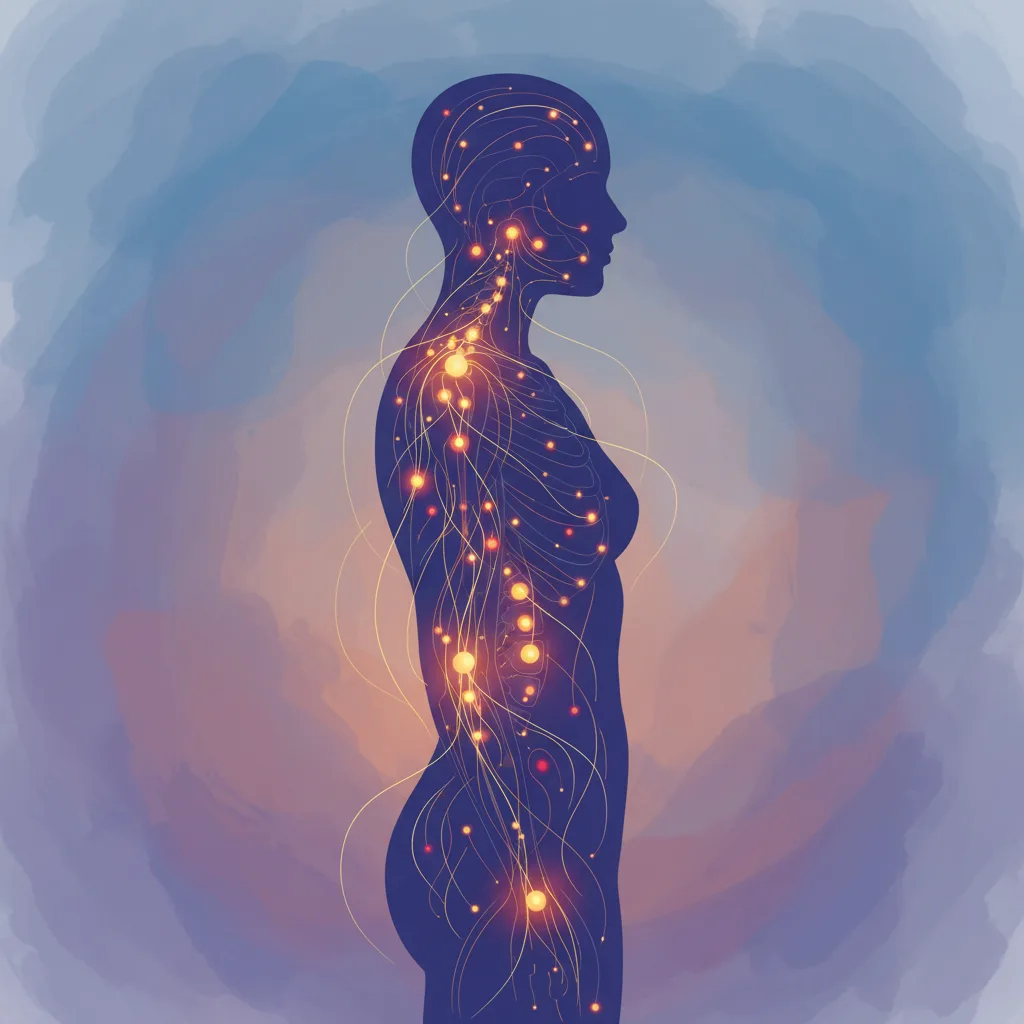
The freeze response, often overlooked in popular discussions of stress, represents the nervous system's last-resort protective mechanism. When fight or flight are not viable options, the dorsal vagal complex triggers a shutdown response — heart rate drops, muscles go limp, and consciousness may become foggy or dissociated. This response evolved to minimize pain during inescapable threat but can become chronically activated in individuals with complex trauma histories.
Interoception — the ability to sense internal bodily signals — is increasingly recognized as foundational to emotional regulation. Research published in Biological Psychology (2019) found that individuals with poor interoceptive accuracy were more likely to experience anxiety disorders and had greater difficulty identifying and labeling their emotions. This suggests that learning to sense your own heartbeat, breathing patterns, and gut signals may be as important as any cognitive therapy technique.
The relationship between inflammation and mood is one of the most significant discoveries in psychiatry in the past two decades. Research has demonstrated that approximately one-third of patients with treatment-resistant depression show elevated inflammatory markers, and that anti-inflammatory interventions (including omega-3 supplementation, exercise, and anti-inflammatory diets) can produce antidepressant effects in this subgroup. This 'inflammatory' subtype of depression is characterized by fatigue, psychomotor slowing, and increased sleep — symptoms that differ from the classic 'low serotonin' presentation of decreased appetite, insomnia, and agitation. Recognizing this distinction has important implications for treatment selection.
Sleep debt is not a simple bank account. While acute sleep loss (one or two bad nights) can be partially recovered with extra sleep, chronic sleep restriction creates cumulative cognitive deficits that cannot be fully reversed by a single weekend of catch-up sleep. A study in the American Journal of Physiology (2010) found that after two weeks of sleeping 6 hours per night, cognitive performance was equivalent to someone who had been awake for 48 hours straight — yet participants rated their sleepiness as only mildly elevated, suggesting dangerous subjective adaptation to impairment.
Melatonin is widely misunderstood. It is not a sedative — it is a chronobiotic signal that tells the body it's time to prepare for sleep. Exogenous melatonin supplements are most effective for circadian rhythm disorders (jet lag, shift work) rather than general insomnia. Research from MIT suggests that most commercial melatonin supplements contain doses 3-10 times higher than what's physiologically effective (0.3-0.5mg vs. the typical 3-10mg sold in stores), and higher doses can actually cause next-day grogginess and disrupt natural melatonin production.
Common Misconceptions
Neuroplasticity research has demonstrated that the brain's stress circuits are not fixed. A 2018 study in Nature Neuroscience showed that even adults who had experienced significant childhood adversity could develop new neural pathways through consistent regulation practices. The prefrontal cortex — responsible for executive function and emotional regulation — showed measurable thickening after just eight weeks of mindfulness-based stress reduction (MBSR), as documented by researchers at Harvard Medical School.
The concept of neuroception, introduced by Stephen Porges in his polyvagal theory, describes the way our nervous system evaluates risk without conscious awareness. Your body is constantly scanning for cues of safety or danger — a process that happens far faster than conscious thought. This explains why you might feel uneasy in a room before you can articulate why, or why certain people's presence immediately puts you at ease.
The temporal dynamics of nervous system regulation are worth understanding. After a stressful event, the body's return to baseline follows a predictable trajectory: heart rate recovers first (within minutes), followed by blood pressure (within 10-20 minutes), followed by cortisol (within 60-90 minutes), followed by inflammatory markers (within hours to days). This means that feeling 'calm' after a stress event does not necessarily mean your body has fully recovered — cortisol and inflammatory markers may remain elevated long after subjective distress has resolved. This is why post-stress recovery practices (gentle movement, social connection, adequate sleep) are important even when you 'feel fine.'
Somatic experiencing, developed by Peter Levine, is based on the observation that wild animals routinely discharge stress energy through physical movement — shaking, trembling, running — and rarely develop trauma-like symptoms. Humans, by contrast, often suppress these natural discharge mechanisms due to social conditioning. Somatic experiencing works by gently guiding individuals to complete interrupted defensive responses and discharge accumulated survival energy from the body.
Track your nervous system state three times per day by rating your arousal level from 1 (shutdown/freeze) to 10 (panic/hyperarousal). Your window of tolerance is typically 4-7. Over time, you'll develop interoceptive awareness that makes regulation easier.
Practical Applications
The polyvagal theory proposes a hierarchical model of autonomic states. The most evolutionarily recent system — the ventral vagal complex — supports social engagement, connection, and calm alertness. When this system is active, we can communicate effectively, think clearly, and feel safe. The sympathetic system, the next layer, mobilizes us for fight or flight. The oldest system — the dorsal vagal complex — triggers freeze and shutdown. Effective regulation involves strengthening ventral vagal tone so that it becomes the default state.
Neuroplasticity research has demonstrated that the brain's stress circuits are not fixed. A 2018 study in Nature Neuroscience showed that even adults who had experienced significant childhood adversity could develop new neural pathways through consistent regulation practices. The prefrontal cortex — responsible for executive function and emotional regulation — showed measurable thickening after just eight weeks of mindfulness-based stress reduction (MBSR), as documented by researchers at Harvard Medical School.
The relationship between the mind and body in stress processing is best understood not as a one-way street but as a continuous feedback loop. Psychological stress produces physical symptoms (muscle tension, digestive disruption, cardiovascular changes), and those physical symptoms, in turn, generate psychological distress (anxiety about health, frustration with chronic symptoms, social withdrawal due to fatigue). Breaking this cycle requires intervention at the physical level, not just the cognitive level. This is why body-based approaches — breathwork, movement, cold exposure, and somatic practices — often succeed where purely cognitive approaches plateau.
The window of tolerance, a concept developed by Daniel Siegel, describes the optimal zone of arousal in which a person can function effectively. Within this window, emotions can be experienced and managed without becoming overwhelming. Above the window lies hyperarousal (anxiety, panic, rage), and below lies hypoarousal (numbness, dissociation, collapse). The goal of nervous system regulation is not to eliminate stress but to widen this window so that a broader range of experiences can be tolerated without dysregulation.
The Mind-Body Connection
The polyvagal theory proposes a hierarchical model of autonomic states. The most evolutionarily recent system — the ventral vagal complex — supports social engagement, connection, and calm alertness. When this system is active, we can communicate effectively, think clearly, and feel safe. The sympathetic system, the next layer, mobilizes us for fight or flight. The oldest system — the dorsal vagal complex — triggers freeze and shutdown. Effective regulation involves strengthening ventral vagal tone so that it becomes the default state.
Interoception — the ability to sense internal bodily signals — is increasingly recognized as foundational to emotional regulation. Research published in Biological Psychology (2019) found that individuals with poor interoceptive accuracy were more likely to experience anxiety disorders and had greater difficulty identifying and labeling their emotions. This suggests that learning to sense your own heartbeat, breathing patterns, and gut signals may be as important as any cognitive therapy technique.
The economic cost of chronic stress and its associated health consequences is staggering. The American Institute of Stress estimates that workplace stress alone costs the U.S. economy over $300 billion annually in absenteeism, turnover, diminished productivity, and medical costs. The World Health Organization has called stress the 'health epidemic of the 21st century.' Yet despite this recognition, most healthcare systems remain oriented toward treating the downstream consequences of chronic stress (cardiovascular disease, mental illness, immune dysfunction) rather than addressing the upstream cause: nervous system dysregulation itself.
REM sleep serves as the brain's overnight therapy session. During REM, the brain replays emotionally charged memories while norepinephrine — the brain's stress chemical — is completely suppressed. This allows emotional memories to be processed and reconsolidated without the accompanying stress response. Research by Matthew Walker's team has shown that dreaming about a traumatic event during REM sleep reduces the emotional charge associated with that memory, which may explain why individuals with PTSD — who often have disrupted REM sleep — struggle to process traumatic experiences.
Who Benefits Most
Co-regulation — the process by which one person's regulated nervous system helps another person regulate — is not limited to parent-child relationships. Research from the University of Virginia (2020) demonstrated that romantic partners' cortisol levels synchronize within 20 minutes of physical proximity. Similarly, studies of group breathwork sessions show collective heart rate variability coherence, suggesting that nervous system states are genuinely contagious.
Heart rate variability (HRV) has emerged as one of the most reliable biomarkers for nervous system flexibility. Unlike resting heart rate, which tells you how fast your heart beats, HRV measures the variation in time between successive heartbeats. Higher HRV indicates greater parasympathetic influence and is associated with better emotional regulation, cognitive flexibility, and stress resilience. Research from the HeartMath Institute has shown that even brief coherence practices can measurably improve HRV within minutes.
A nuanced understanding of the stress response includes recognizing that not all stress is created equal. Acute, time-limited stress followed by recovery (eustress) actually strengthens the nervous system's regulatory capacity through a process called hormesis — similar to how exercise stresses muscles to make them stronger. The problem arises with chronic, unrelenting stress that prevents recovery, or with traumatic stress that overwhelms the system's capacity to process. This distinction matters for practical decision-making: avoiding all stress is neither possible nor beneficial. The goal is to ensure adequate recovery between periods of activation and to avoid sustained activation without relief.
The polyvagal theory proposes a hierarchical model of autonomic states. The most evolutionarily recent system — the ventral vagal complex — supports social engagement, connection, and calm alertness. When this system is active, we can communicate effectively, think clearly, and feel safe. The sympathetic system, the next layer, mobilizes us for fight or flight. The oldest system — the dorsal vagal complex — triggers freeze and shutdown. Effective regulation involves strengthening ventral vagal tone so that it becomes the default state.
The breath is the only autonomic function that can also be consciously controlled, making it a unique bridge between voluntary and involuntary nervous system activity. Research published in the Journal of Neurophysiology (2017) identified a cluster of neurons in the brainstem — the pre-Botzinger complex — that directly links breathing rhythm to arousal states. This neural circuit explains why slow, deep breathing genuinely calms the nervous system rather than merely providing a distraction.
Getting Started: A Step-by-Step Guide
Chronic sympathetic activation creates a cascade of downstream effects that extend far beyond the subjective experience of feeling stressed. Elevated cortisol suppresses immune function, disrupts sleep architecture, impairs memory consolidation in the hippocampus, and promotes visceral fat storage. A landmark study in the Proceedings of the National Academy of Sciences (2004) found that chronic psychological stress was associated with shorter telomere length — essentially accelerating biological aging at the cellular level.
The window of tolerance, a concept developed by Daniel Siegel, describes the optimal zone of arousal in which a person can function effectively. Within this window, emotions can be experienced and managed without becoming overwhelming. Above the window lies hyperarousal (anxiety, panic, rage), and below lies hypoarousal (numbness, dissociation, collapse). The goal of nervous system regulation is not to eliminate stress but to widen this window so that a broader range of experiences can be tolerated without dysregulation.
The temporal dynamics of nervous system regulation are worth understanding. After a stressful event, the body's return to baseline follows a predictable trajectory: heart rate recovers first (within minutes), followed by blood pressure (within 10-20 minutes), followed by cortisol (within 60-90 minutes), followed by inflammatory markers (within hours to days). This means that feeling 'calm' after a stress event does not necessarily mean your body has fully recovered — cortisol and inflammatory markers may remain elevated long after subjective distress has resolved. This is why post-stress recovery practices (gentle movement, social connection, adequate sleep) are important even when you 'feel fine.'
The enteric nervous system, sometimes called the 'second brain,' contains over 500 million neurons lining the gastrointestinal tract. This neural network communicates bidirectionally with the central nervous system via the vagus nerve, which is why stress so commonly manifests as digestive symptoms. Research from the Alimentary Pharmabiotic Centre at University College Cork has demonstrated that gut microbiota composition directly influences vagal signaling and, consequently, stress reactivity and mood.
Common Mistakes to Avoid
The hypothalamic-pituitary-adrenal (HPA) axis is the primary neuroendocrine stress response system. When the hypothalamus detects a threat, it releases corticotropin-releasing hormone (CRH), which stimulates the pituitary gland to release adrenocorticotropic hormone (ACTH), which in turn triggers cortisol release from the adrenal glands. Chronic activation of this axis — as occurs in persistent stress — leads to HPA axis dysregulation, characterized by either chronically elevated cortisol or, paradoxically, blunted cortisol responses (as seen in burnout and certain trauma presentations).
Research published in the journal Psychophysiology (2019) demonstrated that individuals with higher vagal tone — a measure of parasympathetic activity — showed faster emotional recovery after viewing distressing images. These participants returned to baseline heart rate 40% faster than those with lower vagal tone, suggesting that the parasympathetic system acts as a built-in resilience mechanism.
The intersection of nervous system science and traditional healing practices is an area of growing academic interest. Many traditional practices — including yoga, tai chi, chanting, drumming, sweat lodges, and cold water immersion — have been practiced for centuries or millennia and are now being validated by modern neuroscience. A 2018 review in the Annals of the New York Academy of Sciences found that traditional mind-body practices consistently improved vagal tone, reduced inflammatory markers, and enhanced emotional regulation — often through mechanisms that their original practitioners could not have articulated in modern scientific terms but clearly understood experientially.
A 2017 meta-analysis published in Sleep Medicine Reviews analyzed 49 studies and found that cognitive behavioral therapy for insomnia (CBT-I) produced outcomes equal to or better than sleep medication for chronic insomnia — and the effects were more durable. Unlike medication, which loses efficacy over time and carries dependency risks, CBT-I addresses the underlying behavioral and cognitive patterns that perpetuate insomnia.
Sources & Further Reading
- Thayer, J.F., & Lane, R.D. (2009). Claude Bernard and the heart-brain connection: Further elaboration of a model of neurovisceral integration. Neuroscience & Biobehavioral Reviews, 33(2), 81-88.
- Laborde, S., Mosley, E., & Thayer, J.F. (2017). Heart rate variability and cardiac vagal tone in psychophysiological research. Frontiers in Psychology, 8, 213.
- Siegel, D.J. (2012). The Developing Mind: How Relationships and the Brain Interact to Shape Who We Are. Guilford Press.
- Epel, E.S., et al. (2004). Accelerated telomere shortening in response to life stress. Proceedings of the National Academy of Sciences, 101(49), 17312-17315.
- Porges, S.W. (2011). The Polyvagal Theory: Neurophysiological Foundations of Emotions, Attachment, Communication, and Self-Regulation. W.W. Norton & Company.