Notification Anxiety: Why Your Phone Makes You Jumpy (And How to Fix It)
Every ping triggers a micro-stress response. After hundreds a day, your nervous system pays the price.
Defining the Problem
Digital detox research reveals that the benefits are primarily cognitive rather than emotional. A 2019 study from the University of Pennsylvania found that five days without social media improved sleep quality and reduced loneliness but did not significantly affect anxiety levels. This suggests that digital detox addresses certain symptoms (sleep disruption, social comparison) while leaving underlying stress patterns intact, which is why it should be viewed as one component of a broader regulation strategy rather than a standalone solution.
AI anxiety — the stress and existential uncertainty triggered by rapid advances in artificial intelligence — represents a novel form of anticipatory threat that activates the nervous system's uncertainty-detection circuits. The anterior insula and dorsolateral prefrontal cortex, brain regions involved in uncertainty processing, show heightened activation during ambiguous threat scenarios. Research from the American Psychological Association's 2023 Stress in America survey found that 38% of adults reported anxiety about AI's impact on their job security, with the highest rates among workers aged 25-44.
The concept of 'dose-response' in regulation practices is important and often overlooked. Just as medication has an optimal dose range — below which it's ineffective and above which side effects emerge — regulation practices have optimal duration and intensity parameters. Research from Emory University (2019) found that meditation sessions of 10-20 minutes produced the greatest anxiolytic effects, with diminishing returns beyond 30 minutes and some participants actually reporting increased anxiety during sessions longer than 45 minutes (likely due to sustained interoceptive focus amplifying anxious body sensations in untrained practitioners). Starting with shorter sessions and gradually increasing is both safer and more sustainable.
Walking — particularly in natural environments — activates the parasympathetic nervous system through a mechanism researchers call 'soft fascination.' Urban environments demand directed attention (watching for traffic, navigating crowds), which depletes cognitive resources. Natural environments provide indirect attention stimuli (rustling leaves, flowing water, birdsong) that engage the brain without taxing executive function. A Stanford study published in Proceedings of the National Academy of Sciences (2015) found that a 90-minute nature walk reduced activity in the subgenual prefrontal cortex, a region associated with rumination.
The Neuroscience of the Response
Social comparison on Instagram and similar platforms triggers a specific neural response. Research using fMRI at the University of California (2020) showed that viewing idealized images of peers activated the ventral striatum (reward processing) simultaneously with the anterior cingulate cortex (social pain processing), creating a unique neurological experience of simultaneous desire and inadequacy. This dual activation explains why social media can feel simultaneously compelling and distressing.
AI anxiety — the stress and existential uncertainty triggered by rapid advances in artificial intelligence — represents a novel form of anticipatory threat that activates the nervous system's uncertainty-detection circuits. The anterior insula and dorsolateral prefrontal cortex, brain regions involved in uncertainty processing, show heightened activation during ambiguous threat scenarios. Research from the American Psychological Association's 2023 Stress in America survey found that 38% of adults reported anxiety about AI's impact on their job security, with the highest rates among workers aged 25-44.
The clinical implications of this research extend beyond individual treatment. Public health interventions increasingly recognize that chronic stress operates at population level, with socioeconomic disadvantage, racial discrimination, and environmental pollution all contributing to collective nervous system dysregulation. A 2020 study in the American Journal of Public Health found that neighborhood-level stressors — including noise, crime, and lack of green space — predicted HRV at the population level, independent of individual-level factors. This suggests that nervous system health is not solely an individual responsibility but also a function of the environments we create and inhabit.
Swimming combines multiple nervous system regulation mechanisms: the diving reflex triggered by water contact, hydrostatic pressure that provides gentle proprioceptive input across the entire body, rhythmic bilateral movement that activates cross-hemisphere brain coordination, and the meditative quality of regulated breathing. A 2019 systematic review in the British Journal of Sports Medicine found that swimming was associated with a 28% lower risk of all-cause mortality compared to sedentary individuals — a larger reduction than walking or cycling.
The bidirectional relationship between sleep and the immune system is mediated by cytokines — signaling molecules that promote inflammation and immune activation. When you're fighting an infection, pro-inflammatory cytokines like interleukin-1 and tumor necrosis factor increase slow-wave sleep, which is why you feel so sleepy when sick. Conversely, chronic sleep deprivation increases pro-inflammatory cytokine levels even in the absence of infection, creating a state of low-grade systemic inflammation associated with cardiovascular disease, diabetes, and depression.
The nervous system doesn't care about your to-do list. It cares about one thing: are you safe right now?
How Your Body Experiences It
Social comparison on Instagram and similar platforms triggers a specific neural response. Research using fMRI at the University of California (2020) showed that viewing idealized images of peers activated the ventral striatum (reward processing) simultaneously with the anterior cingulate cortex (social pain processing), creating a unique neurological experience of simultaneous desire and inadequacy. This dual activation explains why social media can feel simultaneously compelling and distressing.
AI anxiety — the stress and existential uncertainty triggered by rapid advances in artificial intelligence — represents a novel form of anticipatory threat that activates the nervous system's uncertainty-detection circuits. The anterior insula and dorsolateral prefrontal cortex, brain regions involved in uncertainty processing, show heightened activation during ambiguous threat scenarios. Research from the American Psychological Association's 2023 Stress in America survey found that 38% of adults reported anxiety about AI's impact on their job security, with the highest rates among workers aged 25-44.
For those beginning to explore this territory, the sheer volume of information can itself become overwhelming — paradoxically adding another source of stress. A useful framework is to start with one practice that addresses your most prominent symptom. If your primary issue is racing thoughts, begin with breathwork. If it's physical tension, start with progressive muscle relaxation or somatic movement. If it's emotional reactivity, try a brief daily mindfulness practice. The evidence consistently shows that any single regulation practice, done consistently, produces downstream benefits across multiple domains. You don't need to do everything — you need to do one thing reliably.
Neuroplasticity research has demonstrated that the brain's stress circuits are not fixed. A 2018 study in Nature Neuroscience showed that even adults who had experienced significant childhood adversity could develop new neural pathways through consistent regulation practices. The prefrontal cortex — responsible for executive function and emotional regulation — showed measurable thickening after just eight weeks of mindfulness-based stress reduction (MBSR), as documented by researchers at Harvard Medical School.
The Brain Circuits Involved
Social comparison on Instagram and similar platforms triggers a specific neural response. Research using fMRI at the University of California (2020) showed that viewing idealized images of peers activated the ventral striatum (reward processing) simultaneously with the anterior cingulate cortex (social pain processing), creating a unique neurological experience of simultaneous desire and inadequacy. This dual activation explains why social media can feel simultaneously compelling and distressing.
The work-from-home environment eliminates natural regulation cues that the nervous system relies on: the physical separation of home and work spaces, the commute as a transitional ritual, incidental social co-regulation with colleagues, and the variety of sensory environments throughout the day. Research from Microsoft's Human Factors Lab (2021) found that back-to-back video meetings without breaks caused stress-related beta wave activity to build steadily throughout the day, while brief breaks between meetings allowed for neurological recovery.
The social dimension of regulation cannot be overstated. Humans are fundamentally social regulators — our nervous systems evolved in the context of close-knit social groups where safety was a collective, not individual, achievement. Research from the University of Virginia has demonstrated that holding a loved one's hand during a mildly stressful task reduces both subjective anxiety and neural threat responses (as measured by fMRI) compared to holding a stranger's hand or no hand at all. This effect is dose-dependent, with relationship quality predicting the magnitude of the calming effect. In an era of increasing social isolation, this research underscores the biological necessity of meaningful human connection.
Adaptogens — a class of herbs including ashwagandha, rhodiola rosea, and holy basil — are defined by their ability to normalize physiological function during stress. A 2012 systematic review in Pharmaceuticals found that ashwagandha (Withania somnifera) reduced serum cortisol by an average of 30% in stressed adults. However, the evidence quality remains mixed: many studies have small sample sizes, short durations, and potential conflicts of interest from supplement manufacturers. The most robust evidence supports ashwagandha and rhodiola, while many other marketed adaptogens lack rigorous clinical data.
Caffeine's relationship with anxiety is dose-dependent and highly individual, influenced by genetic variations in the CYP1A2 enzyme that metabolizes caffeine. Fast metabolizers (about 50% of the population) can consume moderate caffeine without significant anxiety effects, while slow metabolizers may experience jitteriness, increased heart rate, and panic-like symptoms from as little as 100mg (one cup of coffee). Research published in Neuropsychopharmacology (2005) found that caffeine at doses above 200mg significantly increased cortisol secretion in habitual consumers, challenging the common belief that tolerance eliminates caffeine's stress effects.
Risk Factors and Vulnerability
Phone addiction — or more accurately, problematic smartphone use — shares neurological features with behavioral addictions. Dopamine release occurs not when you check your phone but in anticipation of checking — the notification sound, the vibration, even the act of reaching for the device triggers a dopamine surge. This anticipatory reward mechanism is the same one exploited by slot machines and was deliberately engineered into social media platforms, as former Facebook and Google engineers have publicly acknowledged.
The work-from-home environment eliminates natural regulation cues that the nervous system relies on: the physical separation of home and work spaces, the commute as a transitional ritual, incidental social co-regulation with colleagues, and the variety of sensory environments throughout the day. Research from Microsoft's Human Factors Lab (2021) found that back-to-back video meetings without breaks caused stress-related beta wave activity to build steadily throughout the day, while brief breaks between meetings allowed for neurological recovery.
The clinical implications of this research extend beyond individual treatment. Public health interventions increasingly recognize that chronic stress operates at population level, with socioeconomic disadvantage, racial discrimination, and environmental pollution all contributing to collective nervous system dysregulation. A 2020 study in the American Journal of Public Health found that neighborhood-level stressors — including noise, crime, and lack of green space — predicted HRV at the population level, independent of individual-level factors. This suggests that nervous system health is not solely an individual responsibility but also a function of the environments we create and inhabit.
The temporal dynamics of nervous system regulation are worth understanding. After a stressful event, the body's return to baseline follows a predictable trajectory: heart rate recovers first (within minutes), followed by blood pressure (within 10-20 minutes), followed by cortisol (within 60-90 minutes), followed by inflammatory markers (within hours to days). This means that feeling 'calm' after a stress event does not necessarily mean your body has fully recovered — cortisol and inflammatory markers may remain elevated long after subjective distress has resolved. This is why post-stress recovery practices (gentle movement, social connection, adequate sleep) are important even when you 'feel fine.'
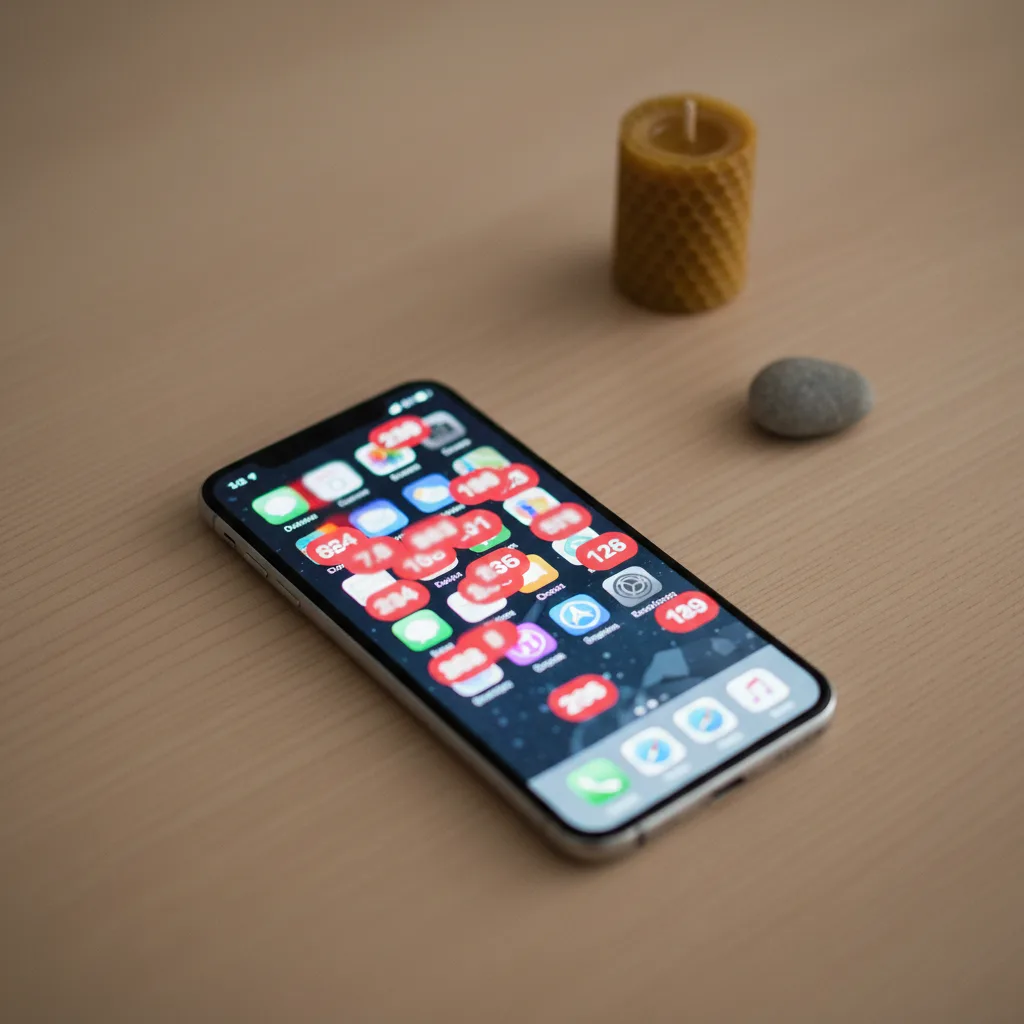
The average person touches their phone 2,617 times per day. Each touch involves a micro-decision that depletes cognitive resources. A simple lock screen reminder ('Is this intentional?') can reduce unconscious phone checking by up to 40%.
The Role of Chronic Stress
Screen time affects the nervous system through multiple pathways. The blue light emitted by screens suppresses melatonin production, but the more significant impact is attentional: the rapid-fire stimulation of social media, news, and notifications keeps the brain in a state of sustained partial attention — a low-level sympathetic activation that prevents deep relaxation even when the content being consumed is not inherently stressful.
The work-from-home environment eliminates natural regulation cues that the nervous system relies on: the physical separation of home and work spaces, the commute as a transitional ritual, incidental social co-regulation with colleagues, and the variety of sensory environments throughout the day. Research from Microsoft's Human Factors Lab (2021) found that back-to-back video meetings without breaks caused stress-related beta wave activity to build steadily throughout the day, while brief breaks between meetings allowed for neurological recovery.
The economic cost of chronic stress and its associated health consequences is staggering. The American Institute of Stress estimates that workplace stress alone costs the U.S. economy over $300 billion annually in absenteeism, turnover, diminished productivity, and medical costs. The World Health Organization has called stress the 'health epidemic of the 21st century.' Yet despite this recognition, most healthcare systems remain oriented toward treating the downstream consequences of chronic stress (cardiovascular disease, mental illness, immune dysfunction) rather than addressing the upstream cause: nervous system dysregulation itself.
Sleep debt is not a simple bank account. While acute sleep loss (one or two bad nights) can be partially recovered with extra sleep, chronic sleep restriction creates cumulative cognitive deficits that cannot be fully reversed by a single weekend of catch-up sleep. A study in the American Journal of Physiology (2010) found that after two weeks of sleeping 6 hours per night, cognitive performance was equivalent to someone who had been awake for 48 hours straight — yet participants rated their sleepiness as only mildly elevated, suggesting dangerous subjective adaptation to impairment.
Behavioral Patterns That Make It Worse
Phone addiction — or more accurately, problematic smartphone use — shares neurological features with behavioral addictions. Dopamine release occurs not when you check your phone but in anticipation of checking — the notification sound, the vibration, even the act of reaching for the device triggers a dopamine surge. This anticipatory reward mechanism is the same one exploited by slot machines and was deliberately engineered into social media platforms, as former Facebook and Google engineers have publicly acknowledged.
The work-from-home environment eliminates natural regulation cues that the nervous system relies on: the physical separation of home and work spaces, the commute as a transitional ritual, incidental social co-regulation with colleagues, and the variety of sensory environments throughout the day. Research from Microsoft's Human Factors Lab (2021) found that back-to-back video meetings without breaks caused stress-related beta wave activity to build steadily throughout the day, while brief breaks between meetings allowed for neurological recovery.
The relationship between inflammation and mood is one of the most significant discoveries in psychiatry in the past two decades. Research has demonstrated that approximately one-third of patients with treatment-resistant depression show elevated inflammatory markers, and that anti-inflammatory interventions (including omega-3 supplementation, exercise, and anti-inflammatory diets) can produce antidepressant effects in this subgroup. This 'inflammatory' subtype of depression is characterized by fatigue, psychomotor slowing, and increased sleep — symptoms that differ from the classic 'low serotonin' presentation of decreased appetite, insomnia, and agitation. Recognizing this distinction has important implications for treatment selection.
The freeze response, often overlooked in popular discussions of stress, represents the nervous system's last-resort protective mechanism. When fight or flight are not viable options, the dorsal vagal complex triggers a shutdown response — heart rate drops, muscles go limp, and consciousness may become foggy or dissociated. This response evolved to minimize pain during inescapable threat but can become chronically activated in individuals with complex trauma histories.
A growing body of research suggests that the most effective interventions are those that combine 'top-down' and 'bottom-up' approaches. Top-down interventions (cognitive therapy, psychoeducation, mindfulness) work through the prefrontal cortex to modulate subcortical stress responses. Bottom-up interventions (breathwork, movement, cold exposure, vagal stimulation) work directly on the autonomic nervous system, bypassing cognitive processing. Research from the Trauma Center at JRI in Boston has shown that individuals with severe dysregulation often benefit most from bottom-up approaches initially, with cognitive interventions becoming more effective once the nervous system has stabilized sufficiently to support reflective thinking.
Evidence-Based Interventions
The work-from-home environment eliminates natural regulation cues that the nervous system relies on: the physical separation of home and work spaces, the commute as a transitional ritual, incidental social co-regulation with colleagues, and the variety of sensory environments throughout the day. Research from Microsoft's Human Factors Lab (2021) found that back-to-back video meetings without breaks caused stress-related beta wave activity to build steadily throughout the day, while brief breaks between meetings allowed for neurological recovery.
Social comparison on Instagram and similar platforms triggers a specific neural response. Research using fMRI at the University of California (2020) showed that viewing idealized images of peers activated the ventral striatum (reward processing) simultaneously with the anterior cingulate cortex (social pain processing), creating a unique neurological experience of simultaneous desire and inadequacy. This dual activation explains why social media can feel simultaneously compelling and distressing.
One practical implication of this research that is often overlooked is the importance of transitional rituals — deliberate practices that mark the boundary between different states of activation. The morning commute, the lunch break, the evening decompression — these transitional periods serve a neurological function by allowing the nervous system to shift between different modes of operation. The erosion of these boundaries in remote work culture, where the laptop opens on the nightstand and closes on the couch, has eliminated many of the natural regulation points that previously structured the day. Deliberately creating transitional rituals (a 10-minute walk between work and dinner, a specific 'shutdown' routine at end of work, different physical spaces for different activities) can significantly improve nervous system regulation even without adding formal 'practices.'
Fermented foods influence mental health through the gut-brain axis by providing live probiotic organisms and producing neuroactive compounds during fermentation. Kimchi, sauerkraut, yogurt, kefir, and kombucha all contain strains of Lactobacillus and Bifidobacterium that have demonstrated anxiolytic properties in clinical trials. A 2022 study published in Molecular Psychiatry found that a diet enriched with fermented foods for four weeks significantly increased microbial diversity and reduced perceived stress levels, with effects that persisted four weeks after the dietary intervention ended.
Napping science reveals a nuanced picture. A NASA study on military pilots and astronauts found that a 26-minute nap improved performance by 34% and alertness by 54%. However, naps longer than 30 minutes carry the risk of sleep inertia — grogginess caused by waking from deeper sleep stages. The optimal nap length depends on the goal: 10-20 minutes for alertness, 60 minutes for cognitive memory processing (with potential grogginess), or 90 minutes for a full sleep cycle including REM (mood and creativity benefits).
The Body-Based Approach
Screen time affects the nervous system through multiple pathways. The blue light emitted by screens suppresses melatonin production, but the more significant impact is attentional: the rapid-fire stimulation of social media, news, and notifications keeps the brain in a state of sustained partial attention — a low-level sympathetic activation that prevents deep relaxation even when the content being consumed is not inherently stressful.
Digital detox research reveals that the benefits are primarily cognitive rather than emotional. A 2019 study from the University of Pennsylvania found that five days without social media improved sleep quality and reduced loneliness but did not significantly affect anxiety levels. This suggests that digital detox addresses certain symptoms (sleep disruption, social comparison) while leaving underlying stress patterns intact, which is why it should be viewed as one component of a broader regulation strategy rather than a standalone solution.
The economic cost of chronic stress and its associated health consequences is staggering. The American Institute of Stress estimates that workplace stress alone costs the U.S. economy over $300 billion annually in absenteeism, turnover, diminished productivity, and medical costs. The World Health Organization has called stress the 'health epidemic of the 21st century.' Yet despite this recognition, most healthcare systems remain oriented toward treating the downstream consequences of chronic stress (cardiovascular disease, mental illness, immune dysfunction) rather than addressing the upstream cause: nervous system dysregulation itself.
Morning anxiety — the experience of waking with a racing heart, tight chest, and sense of dread — has a clear physiological basis. Cortisol naturally peaks 30-45 minutes after waking in what's called the cortisol awakening response (CAR). In individuals with anxiety disorders, this response is amplified, sometimes producing cortisol levels 2-3 times higher than normal. Research published in Psychoneuroendocrinology (2007) found that a heightened CAR was associated with greater perceived stress, worry, and rumination throughout the day.
Cognitive Strategies That Work
AI anxiety — the stress and existential uncertainty triggered by rapid advances in artificial intelligence — represents a novel form of anticipatory threat that activates the nervous system's uncertainty-detection circuits. The anterior insula and dorsolateral prefrontal cortex, brain regions involved in uncertainty processing, show heightened activation during ambiguous threat scenarios. Research from the American Psychological Association's 2023 Stress in America survey found that 38% of adults reported anxiety about AI's impact on their job security, with the highest rates among workers aged 25-44.
Phone addiction — or more accurately, problematic smartphone use — shares neurological features with behavioral addictions. Dopamine release occurs not when you check your phone but in anticipation of checking — the notification sound, the vibration, even the act of reaching for the device triggers a dopamine surge. This anticipatory reward mechanism is the same one exploited by slot machines and was deliberately engineered into social media platforms, as former Facebook and Google engineers have publicly acknowledged.
The intersection of nervous system science and traditional healing practices is an area of growing academic interest. Many traditional practices — including yoga, tai chi, chanting, drumming, sweat lodges, and cold water immersion — have been practiced for centuries or millennia and are now being validated by modern neuroscience. A 2018 review in the Annals of the New York Academy of Sciences found that traditional mind-body practices consistently improved vagal tone, reduced inflammatory markers, and enhanced emotional regulation — often through mechanisms that their original practitioners could not have articulated in modern scientific terms but clearly understood experientially.
This finding aligns with a broader pattern in psychophysiology research: the body's regulatory systems are not fixed but remarkably plastic. When provided with consistent, appropriate inputs — whether through breathwork, movement, social connection, or nutritional support — the nervous system can recalibrate toward more adaptive baseline states. The key word here is 'consistent.' Single interventions produce temporary shifts; sustained practice produces lasting change. Research from the University of Wisconsin's Center for Healthy Minds has demonstrated that as little as two weeks of daily practice can produce detectable changes in neural connectivity, with more substantial structural changes emerging after eight to twelve weeks.
Sources & Further Reading
- Ward, A.F., et al. (2017). Brain drain: The mere presence of one's own smartphone reduces available cognitive capacity. Journal of the Association for Consumer Research, 2(2), 140-154.
- Loh, K.K., & Kanai, R. (2014). Higher media multi-tasking activity is associated with smaller gray-matter density in the anterior cingulate cortex. PLoS ONE, 9(9), e106698.
- Stothart, C., Mitchum, A., & Yehnert, C. (2015). The attentional cost of receiving a cell phone notification. Journal of Experimental Psychology: Human Perception and Performance, 41(4), 893-897.
- Twenge, J.M. (2019). More time on technology, less happiness? Associations between digital-media use and psychological well-being. Current Directions in Psychological Science, 28(4), 372-379.
- Newport, C. (2019). Digital Minimalism: Choosing a Focused Life in a Noisy World. Portfolio.