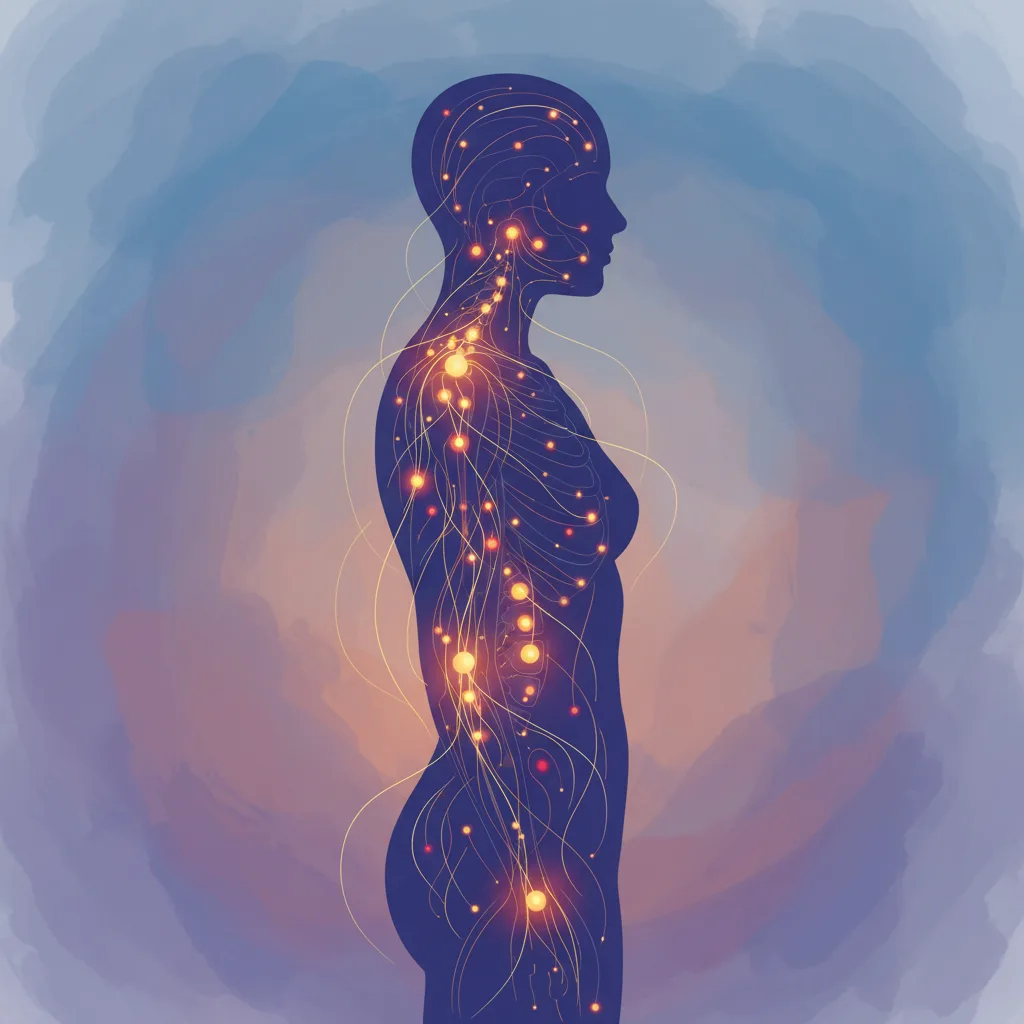
How to Stop Ruminating: A Neuroscience-Based Guide to Breaking Thought Loops
Rumination is not problem-solving — it's a neural habit that strengthens the circuits of distress.

Defining the Problem
Decision fatigue is not merely a colloquial complaint but a well-documented cognitive phenomenon. A famous study of Israeli parole judges published in the Proceedings of the National Academy of Sciences (2011) found that the probability of a favorable ruling dropped from about 65% at the start of a session to nearly 0% just before a break — then reset to 65% after the break. This research demonstrates that decision-making depletes a finite cognitive resource, and that the depleted brain defaults to the path of least resistance.
Gratitude practices have measurable neurological effects. Research using fMRI at Indiana University (2015) demonstrated that gratitude journaling increased activation in the medial prefrontal cortex — a brain region associated with learning, decision-making, and value assessment. Participants who wrote gratitude letters showed greater neural sensitivity to gratitude experiences three months later, suggesting that the practice creates lasting changes in how the brain processes positive experiences.
It's also worth noting that individual variation in response to different regulation techniques is substantial and influenced by factors including genetics, trauma history, attachment style, and current nervous system state. A practice that is deeply calming for one person (such as meditation) may be destabilizing for another (particularly individuals with trauma who may find stillness activating). This is not a failure of the practice or the practitioner — it's a reflection of genuine neurobiological difference. The most effective approach is experimental: try a technique for two to four weeks, track your subjective response, and adjust accordingly.
Stress eating is not a failure of willpower but a neurobiologically driven behavior. During acute stress, cortisol increases appetite specifically for calorie-dense, high-fat, high-sugar foods — a response that evolved to replenish energy stores after physical exertion (fighting, fleeing). Research from the University of California, San Francisco, has shown that these comfort foods temporarily reduce HPA axis activity, creating a genuine (if short-lived) stress-buffering effect. This is why stress eating persists: it works, neurochemically, in the moment.
The relationship between sleep and emotional regulation is bidirectional and potent. Research published in Current Biology (2007) showed that after one night of total sleep deprivation, the amygdala showed a 60% increase in reactivity to negative emotional stimuli, while its functional connectivity with the prefrontal cortex — the brain's rational regulatory center — was significantly reduced. In essence, a single night of poor sleep creates a brain that is more emotionally reactive and less able to regulate those reactions.
The Neuroscience of the Response
The distinction between stress and anxiety is both neurological and temporal. Stress is a response to an identifiable external stimulus — a deadline, a conflict, a financial setback. Anxiety, by contrast, is the persistence of the stress response in the absence of an immediate threat. Neuroimaging research from the National Institute of Mental Health has shown that anxiety involves hyperactivity in the amygdala and anterior insula even when no threat is present, suggesting that the brain's threat-detection system is firing inappropriately.
Burnout, as defined by the World Health Organization in 2019, is specifically an occupational phenomenon characterized by three dimensions: emotional exhaustion, depersonalization (cynicism toward work), and reduced personal accomplishment. Research from the Karolinska Institute in Sweden has shown that burnout is associated with measurable changes in brain structure — specifically, thinning of the prefrontal cortex and enlargement of the amygdala — changes that mirror those seen in chronic stress and early trauma.
The concept of 'dose-response' in regulation practices is important and often overlooked. Just as medication has an optimal dose range — below which it's ineffective and above which side effects emerge — regulation practices have optimal duration and intensity parameters. Research from Emory University (2019) found that meditation sessions of 10-20 minutes produced the greatest anxiolytic effects, with diminishing returns beyond 30 minutes and some participants actually reporting increased anxiety during sessions longer than 45 minutes (likely due to sustained interoceptive focus amplifying anxious body sensations in untrained practitioners). Starting with shorter sessions and gradually increasing is both safer and more sustainable.
The bidirectional relationship between sleep and the immune system is mediated by cytokines — signaling molecules that promote inflammation and immune activation. When you're fighting an infection, pro-inflammatory cytokines like interleukin-1 and tumor necrosis factor increase slow-wave sleep, which is why you feel so sleepy when sick. Conversely, chronic sleep deprivation increases pro-inflammatory cytokine levels even in the absence of infection, creating a state of low-grade systemic inflammation associated with cardiovascular disease, diabetes, and depression.
Attachment theory, originally developed by John Bowlby and later expanded by Mary Ainsworth, has been powerfully connected to adult stress responses. A 2016 meta-analysis in Psychological Bulletin found that insecure attachment styles (anxious, avoidant, and disorganized) were associated with heightened cortisol reactivity to stressors, reduced HRV, and greater difficulty with emotional regulation. These findings suggest that early relational experiences literally shape the nervous system's capacity to handle stress in adulthood.
Stress is not what happens to you. It's the gap between what your nervous system expects and what it encounters.
How Your Body Experiences It
The breath is the only autonomic function that can also be consciously controlled, making it a unique bridge between voluntary and involuntary nervous system activity. Research published in the Journal of Neurophysiology (2017) identified a cluster of neurons in the brainstem — the pre-Botzinger complex — that directly links breathing rhythm to arousal states. This neural circuit explains why slow, deep breathing genuinely calms the nervous system rather than merely providing a distraction.
Burnout, as defined by the World Health Organization in 2019, is specifically an occupational phenomenon characterized by three dimensions: emotional exhaustion, depersonalization (cynicism toward work), and reduced personal accomplishment. Research from the Karolinska Institute in Sweden has shown that burnout is associated with measurable changes in brain structure — specifically, thinning of the prefrontal cortex and enlargement of the amygdala — changes that mirror those seen in chronic stress and early trauma.
A growing body of research suggests that the most effective interventions are those that combine 'top-down' and 'bottom-up' approaches. Top-down interventions (cognitive therapy, psychoeducation, mindfulness) work through the prefrontal cortex to modulate subcortical stress responses. Bottom-up interventions (breathwork, movement, cold exposure, vagal stimulation) work directly on the autonomic nervous system, bypassing cognitive processing. Research from the Trauma Center at JRI in Boston has shown that individuals with severe dysregulation often benefit most from bottom-up approaches initially, with cognitive interventions becoming more effective once the nervous system has stabilized sufficiently to support reflective thinking.
Fascia — the continuous web of connective tissue that surrounds every muscle, bone, nerve, and organ — is increasingly recognized as a sensory organ in its own right. Research from the Fascia Research Congress has demonstrated that fascia contains more proprioceptive nerve endings than muscle tissue itself. When fascia becomes restricted through chronic tension, injury, or sedentary behavior, it sends persistent nociceptive (pain) signals to the central nervous system, maintaining a low-level stress response even in the absence of psychological stressors.
The Brain Circuits Involved
Rumination — repetitive, circular thinking about problems or distressing events — is one of the strongest predictors of depression and anxiety. Research from Stanford University (2013) using fMRI showed that rumination involves hyperactivation of the default mode network, particularly the subgenual prefrontal cortex, a region strongly implicated in depression. Importantly, rumination is not problem-solving — it does not lead to insight or resolution. Instead, it amplifies negative affect and strengthens the neural pathways associated with distress.
The relationship between chronic pain and stress is mediated by shared neural circuits. Research from Northwestern University's Feinberg School of Medicine has shown that chronic pain reorganizes the brain's emotional processing regions, particularly the prefrontal cortex and amygdala. This neurological overlap explains why chronic pain patients frequently develop anxiety and depression, and why effective pain treatment increasingly involves addressing the nervous system's stress response rather than solely targeting peripheral pain signals.
This finding aligns with a broader pattern in psychophysiology research: the body's regulatory systems are not fixed but remarkably plastic. When provided with consistent, appropriate inputs — whether through breathwork, movement, social connection, or nutritional support — the nervous system can recalibrate toward more adaptive baseline states. The key word here is 'consistent.' Single interventions produce temporary shifts; sustained practice produces lasting change. Research from the University of Wisconsin's Center for Healthy Minds has demonstrated that as little as two weeks of daily practice can produce detectable changes in neural connectivity, with more substantial structural changes emerging after eight to twelve weeks.
Notification anxiety represents a conditioned stress response. Research from the University of Sussex (2016) found that smartphone notifications, even when unread, produced significant increases in inattention, hyperactivity, and distraction symptoms. The mere awareness that notifications might arrive kept participants in a state of low-level vigilance — a sympathetic nervous system activation pattern that compounds over hundreds of daily interruptions.
Risk Factors and Vulnerability
The breath is the only autonomic function that can also be consciously controlled, making it a unique bridge between voluntary and involuntary nervous system activity. Research published in the Journal of Neurophysiology (2017) identified a cluster of neurons in the brainstem — the pre-Botzinger complex — that directly links breathing rhythm to arousal states. This neural circuit explains why slow, deep breathing genuinely calms the nervous system rather than merely providing a distraction.
Decision fatigue is not merely a colloquial complaint but a well-documented cognitive phenomenon. A famous study of Israeli parole judges published in the Proceedings of the National Academy of Sciences (2011) found that the probability of a favorable ruling dropped from about 65% at the start of a session to nearly 0% just before a break — then reset to 65% after the break. This research demonstrates that decision-making depletes a finite cognitive resource, and that the depleted brain defaults to the path of least resistance.
The vagus nerve's role extends far beyond what most popular accounts describe. In addition to its well-known effects on heart rate and digestion, the vagus nerve modulates the inflammatory reflex (reducing systemic inflammation), influences pain processing, regulates glucose metabolism, and even affects social cognition through its connections to facial muscles and middle ear structures involved in detecting prosodic (emotional) features of speech. Research from the Feinstein Institutes for Medical Research has demonstrated that electrical stimulation of the vagus nerve can reduce TNF-alpha (a key inflammatory cytokine) by up to 50%, which has led to FDA-approved vagus nerve stimulation devices for treatment-resistant depression and epilepsy.
Therapy modalities differ in their primary mechanism of action, and the best choice depends on the nature of the presenting concern. CBT targets maladaptive thought patterns through cognitive restructuring and behavioral activation. EMDR facilitates the reprocessing of traumatic memories through bilateral stimulation. Somatic therapies address trauma stored in the body through movement, breath, and interoceptive awareness. DBT provides skills for emotional regulation, distress tolerance, and interpersonal effectiveness. Research published in the Journal of Consulting and Clinical Psychology (2017) found that while all evidence-based therapies produce comparable overall outcomes, specific populations show differential responses — EMDR is particularly effective for single-incident PTSD, while DBT shows superior outcomes for borderline personality features.
If your anxiety is worst in the morning and improves throughout the day, focus on managing the cortisol awakening response: no phone for the first 30 minutes, morning sunlight, protein-rich breakfast, and 5 minutes of slow breathing before getting out of bed.
The Role of Chronic Stress
Attachment theory, originally developed by John Bowlby and later expanded by Mary Ainsworth, has been powerfully connected to adult stress responses. A 2016 meta-analysis in Psychological Bulletin found that insecure attachment styles (anxious, avoidant, and disorganized) were associated with heightened cortisol reactivity to stressors, reduced HRV, and greater difficulty with emotional regulation. These findings suggest that early relational experiences literally shape the nervous system's capacity to handle stress in adulthood.
The hormonal stress response in women involves additional complexity beyond the HPA axis. Estrogen and progesterone modulate cortisol sensitivity, serotonin production, and GABA receptor function, which is why stress symptoms often fluctuate across the menstrual cycle. Research published in Biological Psychiatry (2018) found that women in the luteal phase (post-ovulation) showed heightened amygdala reactivity to threatening stimuli and reduced prefrontal regulation — essentially creating a window of increased vulnerability to anxiety and stress.
The relationship between the mind and body in stress processing is best understood not as a one-way street but as a continuous feedback loop. Psychological stress produces physical symptoms (muscle tension, digestive disruption, cardiovascular changes), and those physical symptoms, in turn, generate psychological distress (anxiety about health, frustration with chronic symptoms, social withdrawal due to fatigue). Breaking this cycle requires intervention at the physical level, not just the cognitive level. This is why body-based approaches — breathwork, movement, cold exposure, and somatic practices — often succeed where purely cognitive approaches plateau.
Chronotype — your natural preference for morning or evening activity — is genetically determined and shifts across the lifespan. Research published in Current Biology (2019) identified nearly 400 genetic variants associated with chronotype. Adolescents naturally shift toward later chronotypes (explaining why teens struggle with early school start times), while older adults tend to shift earlier. Forcing yourself to operate against your chronotype has measurable health consequences: a UK Biobank study of 430,000 people found that evening chronotypes forced to wake early had a 10% higher mortality risk.
Digital detox research reveals that the benefits are primarily cognitive rather than emotional. A 2019 study from the University of Pennsylvania found that five days without social media improved sleep quality and reduced loneliness but did not significantly affect anxiety levels. This suggests that digital detox addresses certain symptoms (sleep disruption, social comparison) while leaving underlying stress patterns intact, which is why it should be viewed as one component of a broader regulation strategy rather than a standalone solution.
Behavioral Patterns That Make It Worse
Burnout, as defined by the World Health Organization in 2019, is specifically an occupational phenomenon characterized by three dimensions: emotional exhaustion, depersonalization (cynicism toward work), and reduced personal accomplishment. Research from the Karolinska Institute in Sweden has shown that burnout is associated with measurable changes in brain structure — specifically, thinning of the prefrontal cortex and enlargement of the amygdala — changes that mirror those seen in chronic stress and early trauma.
Decision fatigue is not merely a colloquial complaint but a well-documented cognitive phenomenon. A famous study of Israeli parole judges published in the Proceedings of the National Academy of Sciences (2011) found that the probability of a favorable ruling dropped from about 65% at the start of a session to nearly 0% just before a break — then reset to 65% after the break. This research demonstrates that decision-making depletes a finite cognitive resource, and that the depleted brain defaults to the path of least resistance.
For those beginning to explore this territory, the sheer volume of information can itself become overwhelming — paradoxically adding another source of stress. A useful framework is to start with one practice that addresses your most prominent symptom. If your primary issue is racing thoughts, begin with breathwork. If it's physical tension, start with progressive muscle relaxation or somatic movement. If it's emotional reactivity, try a brief daily mindfulness practice. The evidence consistently shows that any single regulation practice, done consistently, produces downstream benefits across multiple domains. You don't need to do everything — you need to do one thing reliably.
Digital minimalism, as articulated by Cal Newport, is not simply about reducing screen time but about intentionally selecting technologies that support your values while eliminating those that don't. A 2020 controlled trial at the University of Bath found that participants who followed a structured digital minimalism protocol for 30 days reported sustained improvements in focus, sleep quality, and self-reported well-being at 3-month follow-up — effects that outlasted the protocol itself because participants had developed new behavioral defaults.
The relationship between sleep and emotional regulation is bidirectional and potent. Research published in Current Biology (2007) showed that after one night of total sleep deprivation, the amygdala showed a 60% increase in reactivity to negative emotional stimuli, while its functional connectivity with the prefrontal cortex — the brain's rational regulatory center — was significantly reduced. In essence, a single night of poor sleep creates a brain that is more emotionally reactive and less able to regulate those reactions.
Evidence-Based Interventions
Burnout, as defined by the World Health Organization in 2019, is specifically an occupational phenomenon characterized by three dimensions: emotional exhaustion, depersonalization (cynicism toward work), and reduced personal accomplishment. Research from the Karolinska Institute in Sweden has shown that burnout is associated with measurable changes in brain structure — specifically, thinning of the prefrontal cortex and enlargement of the amygdala — changes that mirror those seen in chronic stress and early trauma.
Perfectionism operates as a chronic stress generator because it creates an impossible standard against which all performance is evaluated. Research by Thomas Curran and Andrew Hill, published in Psychological Bulletin (2019), found that perfectionism has increased substantially across generations, with socially prescribed perfectionism (the belief that others demand perfection from you) showing the steepest rise. This form of perfectionism is most strongly associated with anxiety, depression, and burnout because the source of the standard feels external and uncontrollable.
The economic cost of chronic stress and its associated health consequences is staggering. The American Institute of Stress estimates that workplace stress alone costs the U.S. economy over $300 billion annually in absenteeism, turnover, diminished productivity, and medical costs. The World Health Organization has called stress the 'health epidemic of the 21st century.' Yet despite this recognition, most healthcare systems remain oriented toward treating the downstream consequences of chronic stress (cardiovascular disease, mental illness, immune dysfunction) rather than addressing the upstream cause: nervous system dysregulation itself.
Co-regulation — the process by which one person's regulated nervous system helps another person regulate — is not limited to parent-child relationships. Research from the University of Virginia (2020) demonstrated that romantic partners' cortisol levels synchronize within 20 minutes of physical proximity. Similarly, studies of group breathwork sessions show collective heart rate variability coherence, suggesting that nervous system states are genuinely contagious.
The Body-Based Approach
The relationship between chronic pain and stress is mediated by shared neural circuits. Research from Northwestern University's Feinberg School of Medicine has shown that chronic pain reorganizes the brain's emotional processing regions, particularly the prefrontal cortex and amygdala. This neurological overlap explains why chronic pain patients frequently develop anxiety and depression, and why effective pain treatment increasingly involves addressing the nervous system's stress response rather than solely targeting peripheral pain signals.
Morning anxiety — the experience of waking with a racing heart, tight chest, and sense of dread — has a clear physiological basis. Cortisol naturally peaks 30-45 minutes after waking in what's called the cortisol awakening response (CAR). In individuals with anxiety disorders, this response is amplified, sometimes producing cortisol levels 2-3 times higher than normal. Research published in Psychoneuroendocrinology (2007) found that a heightened CAR was associated with greater perceived stress, worry, and rumination throughout the day.
The social dimension of regulation cannot be overstated. Humans are fundamentally social regulators — our nervous systems evolved in the context of close-knit social groups where safety was a collective, not individual, achievement. Research from the University of Virginia has demonstrated that holding a loved one's hand during a mildly stressful task reduces both subjective anxiety and neural threat responses (as measured by fMRI) compared to holding a stranger's hand or no hand at all. This effect is dose-dependent, with relationship quality predicting the magnitude of the calming effect. In an era of increasing social isolation, this research underscores the biological necessity of meaningful human connection.
Burnout, as defined by the World Health Organization in 2019, is specifically an occupational phenomenon characterized by three dimensions: emotional exhaustion, depersonalization (cynicism toward work), and reduced personal accomplishment. Research from the Karolinska Institute in Sweden has shown that burnout is associated with measurable changes in brain structure — specifically, thinning of the prefrontal cortex and enlargement of the amygdala — changes that mirror those seen in chronic stress and early trauma.
The autonomic nervous system operates largely below conscious awareness, governing heart rate, digestion, respiratory rate, pupillary response, urination, and sexual arousal. It consists of two primary branches: the sympathetic nervous system, which mobilizes the body for action, and the parasympathetic nervous system, which promotes rest, recovery, and digestion. Understanding this fundamental division is the first step toward meaningful nervous system regulation.
Cognitive Strategies That Work
The breath is the only autonomic function that can also be consciously controlled, making it a unique bridge between voluntary and involuntary nervous system activity. Research published in the Journal of Neurophysiology (2017) identified a cluster of neurons in the brainstem — the pre-Botzinger complex — that directly links breathing rhythm to arousal states. This neural circuit explains why slow, deep breathing genuinely calms the nervous system rather than merely providing a distraction.
The distinction between stress and anxiety is both neurological and temporal. Stress is a response to an identifiable external stimulus — a deadline, a conflict, a financial setback. Anxiety, by contrast, is the persistence of the stress response in the absence of an immediate threat. Neuroimaging research from the National Institute of Mental Health has shown that anxiety involves hyperactivity in the amygdala and anterior insula even when no threat is present, suggesting that the brain's threat-detection system is firing inappropriately.
One practical implication of this research that is often overlooked is the importance of transitional rituals — deliberate practices that mark the boundary between different states of activation. The morning commute, the lunch break, the evening decompression — these transitional periods serve a neurological function by allowing the nervous system to shift between different modes of operation. The erosion of these boundaries in remote work culture, where the laptop opens on the nightstand and closes on the couch, has eliminated many of the natural regulation points that previously structured the day. Deliberately creating transitional rituals (a 10-minute walk between work and dinner, a specific 'shutdown' routine at end of work, different physical spaces for different activities) can significantly improve nervous system regulation even without adding formal 'practices.'
Emotional flashbacks, a term coined by Pete Walker, differ from the visual flashbacks typically associated with PTSD. Rather than re-experiencing specific traumatic events, emotional flashbacks involve sudden regressions to the emotional state of childhood trauma — overwhelming fear, shame, helplessness, or rage — often without an identifiable trigger. Research published in the Journal of Traumatic Stress (2014) found that emotional flashbacks are a primary feature of complex PTSD and are mediated by implicit (non-verbal) memory systems that bypass conscious recall.
Lifestyle Modifications
Burnout, as defined by the World Health Organization in 2019, is specifically an occupational phenomenon characterized by three dimensions: emotional exhaustion, depersonalization (cynicism toward work), and reduced personal accomplishment. Research from the Karolinska Institute in Sweden has shown that burnout is associated with measurable changes in brain structure — specifically, thinning of the prefrontal cortex and enlargement of the amygdala — changes that mirror those seen in chronic stress and early trauma.
Morning anxiety — the experience of waking with a racing heart, tight chest, and sense of dread — has a clear physiological basis. Cortisol naturally peaks 30-45 minutes after waking in what's called the cortisol awakening response (CAR). In individuals with anxiety disorders, this response is amplified, sometimes producing cortisol levels 2-3 times higher than normal. Research published in Psychoneuroendocrinology (2007) found that a heightened CAR was associated with greater perceived stress, worry, and rumination throughout the day.
This finding aligns with a broader pattern in psychophysiology research: the body's regulatory systems are not fixed but remarkably plastic. When provided with consistent, appropriate inputs — whether through breathwork, movement, social connection, or nutritional support — the nervous system can recalibrate toward more adaptive baseline states. The key word here is 'consistent.' Single interventions produce temporary shifts; sustained practice produces lasting change. Research from the University of Wisconsin's Center for Healthy Minds has demonstrated that as little as two weeks of daily practice can produce detectable changes in neural connectivity, with more substantial structural changes emerging after eight to twelve weeks.
Blood sugar fluctuations have a direct and often underappreciated impact on anxiety symptoms. When blood glucose drops rapidly — as occurs after consuming refined carbohydrates — the body mounts a counter-regulatory response that includes adrenaline and cortisol release. This hormonal cascade produces symptoms (racing heart, sweating, trembling, brain fog) that are physiologically identical to an anxiety attack. Research from Yale University (2013) demonstrated that reactive hypoglycemia was significantly more common in patients with panic disorder than in controls, suggesting that blood sugar management may be an underutilized intervention for anxiety.
The concept of 'dose-response' in regulation practices is important and often overlooked. Just as medication has an optimal dose range — below which it's ineffective and above which side effects emerge — regulation practices have optimal duration and intensity parameters. Research from Emory University (2019) found that meditation sessions of 10-20 minutes produced the greatest anxiolytic effects, with diminishing returns beyond 30 minutes and some participants actually reporting increased anxiety during sessions longer than 45 minutes (likely due to sustained interoceptive focus amplifying anxious body sensations in untrained practitioners). Starting with shorter sessions and gradually increasing is both safer and more sustainable.
Sources & Further Reading
- Danziger, S., Levav, J., & Avnaim-Pesso, L. (2011). Extraneous factors in judicial decisions. Proceedings of the National Academy of Sciences, 108(17), 6889-6892.
- Pennebaker, J.W. (1997). Writing about emotional experiences as a therapeutic process. Psychological Science, 8(3), 162-166.
- Hunt, M.G., et al. (2018). No more FOMO: Limiting social media decreases loneliness and depression. Journal of Social and Clinical Psychology, 37(10), 751-768.
- McEwen, B.S. (2017). Neurobiological and systemic effects of chronic stress. Chronic Stress, 1, 2470547017692328.
- Curran, T., & Hill, A.P. (2019). Perfectionism is increasing over time: A meta-analysis. Psychological Bulletin, 145(4), 410-429.