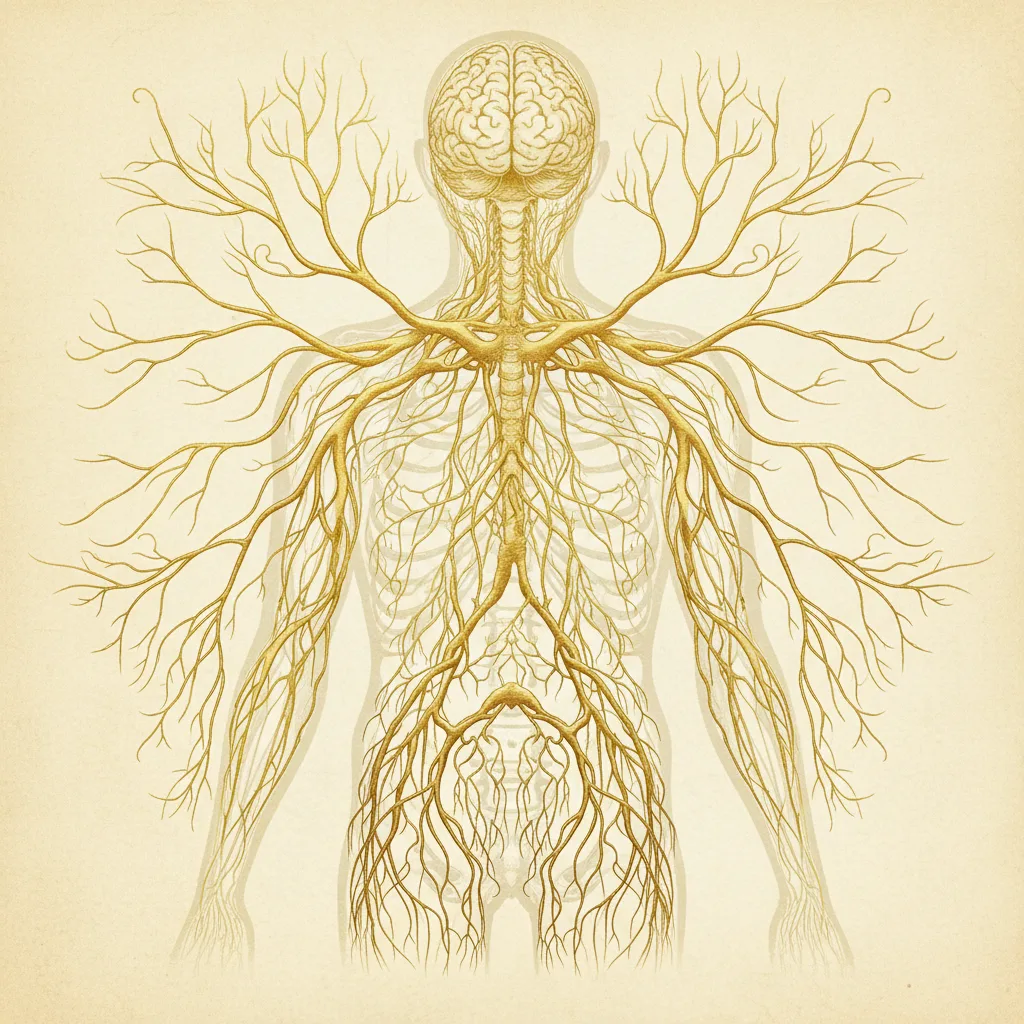
Somatic Experiencing for Beginners: Healing Trauma Through the Body
How Peter Levine's body-based approach helps resolve trauma that talk therapy alone cannot reach.

Who Was Peter Levine?
The autonomic nervous system operates largely below conscious awareness, governing heart rate, digestion, respiratory rate, pupillary response, urination, and sexual arousal. It consists of two primary branches: the sympathetic nervous system, which mobilizes the body for action, and the parasympathetic nervous system, which promotes rest, recovery, and digestion. Understanding this fundamental division is the first step toward meaningful nervous system regulation.
Heart rate variability (HRV) has emerged as one of the most reliable biomarkers for nervous system flexibility. Unlike resting heart rate, which tells you how fast your heart beats, HRV measures the variation in time between successive heartbeats. Higher HRV indicates greater parasympathetic influence and is associated with better emotional regulation, cognitive flexibility, and stress resilience. Research from the HeartMath Institute has shown that even brief coherence practices can measurably improve HRV within minutes.
One of the most underappreciated aspects of this research is the role of safety. The nervous system does not regulate in response to commands or willpower — it regulates in response to cues of safety. This is a fundamental insight from polyvagal theory: the ventral vagal system (which supports calm alertness and social engagement) activates only when the nervous system detects sufficient safety signals. These signals include prosodic voice patterns, warm facial expressions, physical touch, rhythmic movement, and predictable environments. Understanding this helps explain why some people cannot simply 'relax on command' — their nervous system has not received adequate safety cues to permit relaxation.
Exercise reduces anxiety through mechanisms that go far beyond the popular endorphin explanation. Research published in Cell Metabolism (2014) identified a key molecule — kynurenine — that accumulates during stress and crosses the blood-brain barrier, where it produces neuroinflammation and depression-like symptoms. Skeletal muscle, when activated through exercise, produces an enzyme that converts kynurenine into a form that cannot enter the brain. This finding provides a direct molecular explanation for exercise's antidepressant effects.
The Core Insight: Animals Don't Get PTSD
The concept of neuroception, introduced by Stephen Porges in his polyvagal theory, describes the way our nervous system evaluates risk without conscious awareness. Your body is constantly scanning for cues of safety or danger — a process that happens far faster than conscious thought. This explains why you might feel uneasy in a room before you can articulate why, or why certain people's presence immediately puts you at ease.
The polyvagal theory proposes a hierarchical model of autonomic states. The most evolutionarily recent system — the ventral vagal complex — supports social engagement, connection, and calm alertness. When this system is active, we can communicate effectively, think clearly, and feel safe. The sympathetic system, the next layer, mobilizes us for fight or flight. The oldest system — the dorsal vagal complex — triggers freeze and shutdown. Effective regulation involves strengthening ventral vagal tone so that it becomes the default state.
A nuanced understanding of the stress response includes recognizing that not all stress is created equal. Acute, time-limited stress followed by recovery (eustress) actually strengthens the nervous system's regulatory capacity through a process called hormesis — similar to how exercise stresses muscles to make them stronger. The problem arises with chronic, unrelenting stress that prevents recovery, or with traumatic stress that overwhelms the system's capacity to process. This distinction matters for practical decision-making: avoiding all stress is neither possible nor beneficial. The goal is to ensure adequate recovery between periods of activation and to avoid sustained activation without relief.
One practical implication of this research that is often overlooked is the importance of transitional rituals — deliberate practices that mark the boundary between different states of activation. The morning commute, the lunch break, the evening decompression — these transitional periods serve a neurological function by allowing the nervous system to shift between different modes of operation. The erosion of these boundaries in remote work culture, where the laptop opens on the nightstand and closes on the couch, has eliminated many of the natural regulation points that previously structured the day. Deliberately creating transitional rituals (a 10-minute walk between work and dinner, a specific 'shutdown' routine at end of work, different physical spaces for different activities) can significantly improve nervous system regulation even without adding formal 'practices.'
Chronic sympathetic activation creates a cascade of downstream effects that extend far beyond the subjective experience of feeling stressed. Elevated cortisol suppresses immune function, disrupts sleep architecture, impairs memory consolidation in the hippocampus, and promotes visceral fat storage. A landmark study in the Proceedings of the National Academy of Sciences (2004) found that chronic psychological stress was associated with shorter telomere length — essentially accelerating biological aging at the cellular level.
Healing is not linear because the nervous system doesn't operate on a timeline. It operates on a threshold of safety.
Titration: The Art of Small Doses
The autonomic nervous system operates largely below conscious awareness, governing heart rate, digestion, respiratory rate, pupillary response, urination, and sexual arousal. It consists of two primary branches: the sympathetic nervous system, which mobilizes the body for action, and the parasympathetic nervous system, which promotes rest, recovery, and digestion. Understanding this fundamental division is the first step toward meaningful nervous system regulation.
The enteric nervous system, sometimes called the 'second brain,' contains over 500 million neurons lining the gastrointestinal tract. This neural network communicates bidirectionally with the central nervous system via the vagus nerve, which is why stress so commonly manifests as digestive symptoms. Research from the Alimentary Pharmabiotic Centre at University College Cork has demonstrated that gut microbiota composition directly influences vagal signaling and, consequently, stress reactivity and mood.
The relationship between inflammation and mood is one of the most significant discoveries in psychiatry in the past two decades. Research has demonstrated that approximately one-third of patients with treatment-resistant depression show elevated inflammatory markers, and that anti-inflammatory interventions (including omega-3 supplementation, exercise, and anti-inflammatory diets) can produce antidepressant effects in this subgroup. This 'inflammatory' subtype of depression is characterized by fatigue, psychomotor slowing, and increased sleep — symptoms that differ from the classic 'low serotonin' presentation of decreased appetite, insomnia, and agitation. Recognizing this distinction has important implications for treatment selection.
Sleep debt is not a simple bank account. While acute sleep loss (one or two bad nights) can be partially recovered with extra sleep, chronic sleep restriction creates cumulative cognitive deficits that cannot be fully reversed by a single weekend of catch-up sleep. A study in the American Journal of Physiology (2010) found that after two weeks of sleeping 6 hours per night, cognitive performance was equivalent to someone who had been awake for 48 hours straight — yet participants rated their sleepiness as only mildly elevated, suggesting dangerous subjective adaptation to impairment.
Pendulation: Moving Between Comfort and Discomfort
Interoception — the ability to sense internal bodily signals — is increasingly recognized as foundational to emotional regulation. Research published in Biological Psychology (2019) found that individuals with poor interoceptive accuracy were more likely to experience anxiety disorders and had greater difficulty identifying and labeling their emotions. This suggests that learning to sense your own heartbeat, breathing patterns, and gut signals may be as important as any cognitive therapy technique.
The vagus nerve, the longest cranial nerve in the body, serves as the primary conduit for parasympathetic signals. Running from the brainstem through the neck, chest, and abdomen, it innervates the heart, lungs, and digestive tract. When the vagus nerve fires, heart rate decreases, breathing deepens, digestion activates, and inflammatory markers drop. This is why vagal stimulation techniques have become a cornerstone of nervous system regulation practice.
A nuanced understanding of the stress response includes recognizing that not all stress is created equal. Acute, time-limited stress followed by recovery (eustress) actually strengthens the nervous system's regulatory capacity through a process called hormesis — similar to how exercise stresses muscles to make them stronger. The problem arises with chronic, unrelenting stress that prevents recovery, or with traumatic stress that overwhelms the system's capacity to process. This distinction matters for practical decision-making: avoiding all stress is neither possible nor beneficial. The goal is to ensure adequate recovery between periods of activation and to avoid sustained activation without relief.
Sleep remains the single most potent nervous system regulation intervention available, yet it is consistently the most neglected. During sleep — particularly during slow-wave and REM stages — the brain undergoes critical maintenance processes: clearing metabolic waste through the glymphatic system, consolidating memories, processing emotional experiences, recalibrating stress hormones, and repairing cellular damage. The research is unequivocal: there is no aspect of physical or mental health that is not impaired by insufficient sleep, and no amount of other regulation practices can compensate for chronic sleep deprivation. Prioritizing sleep is not optional — it is the foundation upon which all other regulation efforts rest.
Matthew Walker's research at UC Berkeley has demonstrated that even moderate sleep deprivation (sleeping 6 hours instead of 8 for just one week) produces measurable impairments in immune function, with natural killer cell activity dropping by 70%. This finding has significant implications for cancer risk, as natural killer cells are a primary defense against tumor development. Walker's lab also showed that sleep-deprived individuals produce fewer antibodies in response to vaccination.
Tracking Bodily Sensations
Somatic experiencing, developed by Peter Levine, is based on the observation that wild animals routinely discharge stress energy through physical movement — shaking, trembling, running — and rarely develop trauma-like symptoms. Humans, by contrast, often suppress these natural discharge mechanisms due to social conditioning. Somatic experiencing works by gently guiding individuals to complete interrupted defensive responses and discharge accumulated survival energy from the body.
The enteric nervous system, sometimes called the 'second brain,' contains over 500 million neurons lining the gastrointestinal tract. This neural network communicates bidirectionally with the central nervous system via the vagus nerve, which is why stress so commonly manifests as digestive symptoms. Research from the Alimentary Pharmabiotic Centre at University College Cork has demonstrated that gut microbiota composition directly influences vagal signaling and, consequently, stress reactivity and mood.
The temporal dynamics of nervous system regulation are worth understanding. After a stressful event, the body's return to baseline follows a predictable trajectory: heart rate recovers first (within minutes), followed by blood pressure (within 10-20 minutes), followed by cortisol (within 60-90 minutes), followed by inflammatory markers (within hours to days). This means that feeling 'calm' after a stress event does not necessarily mean your body has fully recovered — cortisol and inflammatory markers may remain elevated long after subjective distress has resolved. This is why post-stress recovery practices (gentle movement, social connection, adequate sleep) are important even when you 'feel fine.'
A nuanced understanding of the stress response includes recognizing that not all stress is created equal. Acute, time-limited stress followed by recovery (eustress) actually strengthens the nervous system's regulatory capacity through a process called hormesis — similar to how exercise stresses muscles to make them stronger. The problem arises with chronic, unrelenting stress that prevents recovery, or with traumatic stress that overwhelms the system's capacity to process. This distinction matters for practical decision-making: avoiding all stress is neither possible nor beneficial. The goal is to ensure adequate recovery between periods of activation and to avoid sustained activation without relief.
Track your nervous system state three times per day by rating your arousal level from 1 (shutdown/freeze) to 10 (panic/hyperarousal). Your window of tolerance is typically 4-7. Over time, you'll develop interoceptive awareness that makes regulation easier.
Completing the Defensive Response
Co-regulation — the process by which one person's regulated nervous system helps another person regulate — is not limited to parent-child relationships. Research from the University of Virginia (2020) demonstrated that romantic partners' cortisol levels synchronize within 20 minutes of physical proximity. Similarly, studies of group breathwork sessions show collective heart rate variability coherence, suggesting that nervous system states are genuinely contagious.
Neuroplasticity research has demonstrated that the brain's stress circuits are not fixed. A 2018 study in Nature Neuroscience showed that even adults who had experienced significant childhood adversity could develop new neural pathways through consistent regulation practices. The prefrontal cortex — responsible for executive function and emotional regulation — showed measurable thickening after just eight weeks of mindfulness-based stress reduction (MBSR), as documented by researchers at Harvard Medical School.
It's worth pausing here to address a common misconception. Many people interpret the science of nervous system regulation as suggesting that we should aim for a permanently calm, parasympathetic-dominant state. This is neither possible nor desirable. The sympathetic nervous system exists for excellent reasons: it mobilizes energy for physical activity, sharpens attention during demanding tasks, and enables rapid response to genuine threats. The goal of regulation is not to suppress sympathetic activation but to ensure that the system returns to baseline after activation — and that the activation itself is proportionate to the actual demands of the situation.
The freeze response, often overlooked in popular discussions of stress, represents the nervous system's last-resort protective mechanism. When fight or flight are not viable options, the dorsal vagal complex triggers a shutdown response — heart rate drops, muscles go limp, and consciousness may become foggy or dissociated. This response evolved to minimize pain during inescapable threat but can become chronically activated in individuals with complex trauma histories.
The Felt Sense: Eugene Gendlin's Contribution
The vagus nerve, the longest cranial nerve in the body, serves as the primary conduit for parasympathetic signals. Running from the brainstem through the neck, chest, and abdomen, it innervates the heart, lungs, and digestive tract. When the vagus nerve fires, heart rate decreases, breathing deepens, digestion activates, and inflammatory markers drop. This is why vagal stimulation techniques have become a cornerstone of nervous system regulation practice.
Chronic sympathetic activation creates a cascade of downstream effects that extend far beyond the subjective experience of feeling stressed. Elevated cortisol suppresses immune function, disrupts sleep architecture, impairs memory consolidation in the hippocampus, and promotes visceral fat storage. A landmark study in the Proceedings of the National Academy of Sciences (2004) found that chronic psychological stress was associated with shorter telomere length — essentially accelerating biological aging at the cellular level.
This finding aligns with a broader pattern in psychophysiology research: the body's regulatory systems are not fixed but remarkably plastic. When provided with consistent, appropriate inputs — whether through breathwork, movement, social connection, or nutritional support — the nervous system can recalibrate toward more adaptive baseline states. The key word here is 'consistent.' Single interventions produce temporary shifts; sustained practice produces lasting change. Research from the University of Wisconsin's Center for Healthy Minds has demonstrated that as little as two weeks of daily practice can produce detectable changes in neural connectivity, with more substantial structural changes emerging after eight to twelve weeks.
Co-regulation — the process by which one person's regulated nervous system helps another person regulate — is not limited to parent-child relationships. Research from the University of Virginia (2020) demonstrated that romantic partners' cortisol levels synchronize within 20 minutes of physical proximity. Similarly, studies of group breathwork sessions show collective heart rate variability coherence, suggesting that nervous system states are genuinely contagious.
Somatic Experiencing vs. Talk Therapy
Chronic sympathetic activation creates a cascade of downstream effects that extend far beyond the subjective experience of feeling stressed. Elevated cortisol suppresses immune function, disrupts sleep architecture, impairs memory consolidation in the hippocampus, and promotes visceral fat storage. A landmark study in the Proceedings of the National Academy of Sciences (2004) found that chronic psychological stress was associated with shorter telomere length — essentially accelerating biological aging at the cellular level.
The hypothalamic-pituitary-adrenal (HPA) axis is the primary neuroendocrine stress response system. When the hypothalamus detects a threat, it releases corticotropin-releasing hormone (CRH), which stimulates the pituitary gland to release adrenocorticotropic hormone (ACTH), which in turn triggers cortisol release from the adrenal glands. Chronic activation of this axis — as occurs in persistent stress — leads to HPA axis dysregulation, characterized by either chronically elevated cortisol or, paradoxically, blunted cortisol responses (as seen in burnout and certain trauma presentations).
What makes this area of research particularly compelling is the convergence of evidence from multiple disciplines. Neuroscientists, immunologists, endocrinologists, and psychologists are all arriving at the same conclusion from different angles: chronic stress is not merely a psychological experience but a whole-body physiological state with measurable consequences across every organ system. This interdisciplinary consensus represents a significant departure from the historical tendency to treat mental and physical health as separate domains. The implications for clinical practice are profound — effective treatment must address both the psychological and physiological dimensions of dysregulation.
Therapy modalities differ in their primary mechanism of action, and the best choice depends on the nature of the presenting concern. CBT targets maladaptive thought patterns through cognitive restructuring and behavioral activation. EMDR facilitates the reprocessing of traumatic memories through bilateral stimulation. Somatic therapies address trauma stored in the body through movement, breath, and interoceptive awareness. DBT provides skills for emotional regulation, distress tolerance, and interpersonal effectiveness. Research published in the Journal of Consulting and Clinical Psychology (2017) found that while all evidence-based therapies produce comparable overall outcomes, specific populations show differential responses — EMDR is particularly effective for single-incident PTSD, while DBT shows superior outcomes for borderline personality features.
Exercise reduces anxiety through mechanisms that go far beyond the popular endorphin explanation. Research published in Cell Metabolism (2014) identified a key molecule — kynurenine — that accumulates during stress and crosses the blood-brain barrier, where it produces neuroinflammation and depression-like symptoms. Skeletal muscle, when activated through exercise, produces an enzyme that converts kynurenine into a form that cannot enter the brain. This finding provides a direct molecular explanation for exercise's antidepressant effects.
What to Expect in a Session
The window of tolerance, a concept developed by Daniel Siegel, describes the optimal zone of arousal in which a person can function effectively. Within this window, emotions can be experienced and managed without becoming overwhelming. Above the window lies hyperarousal (anxiety, panic, rage), and below lies hypoarousal (numbness, dissociation, collapse). The goal of nervous system regulation is not to eliminate stress but to widen this window so that a broader range of experiences can be tolerated without dysregulation.
Chronic sympathetic activation creates a cascade of downstream effects that extend far beyond the subjective experience of feeling stressed. Elevated cortisol suppresses immune function, disrupts sleep architecture, impairs memory consolidation in the hippocampus, and promotes visceral fat storage. A landmark study in the Proceedings of the National Academy of Sciences (2004) found that chronic psychological stress was associated with shorter telomere length — essentially accelerating biological aging at the cellular level.
The intersection of nervous system science and traditional healing practices is an area of growing academic interest. Many traditional practices — including yoga, tai chi, chanting, drumming, sweat lodges, and cold water immersion — have been practiced for centuries or millennia and are now being validated by modern neuroscience. A 2018 review in the Annals of the New York Academy of Sciences found that traditional mind-body practices consistently improved vagal tone, reduced inflammatory markers, and enhanced emotional regulation — often through mechanisms that their original practitioners could not have articulated in modern scientific terms but clearly understood experientially.
Exercise reduces anxiety through mechanisms that go far beyond the popular endorphin explanation. Research published in Cell Metabolism (2014) identified a key molecule — kynurenine — that accumulates during stress and crosses the blood-brain barrier, where it produces neuroinflammation and depression-like symptoms. Skeletal muscle, when activated through exercise, produces an enzyme that converts kynurenine into a form that cannot enter the brain. This finding provides a direct molecular explanation for exercise's antidepressant effects.
Chronotype — your natural preference for morning or evening activity — is genetically determined and shifts across the lifespan. Research published in Current Biology (2019) identified nearly 400 genetic variants associated with chronotype. Adolescents naturally shift toward later chronotypes (explaining why teens struggle with early school start times), while older adults tend to shift earlier. Forcing yourself to operate against your chronotype has measurable health consequences: a UK Biobank study of 430,000 people found that evening chronotypes forced to wake early had a 10% higher mortality risk.
The Research Behind Somatic Experiencing
The hypothalamic-pituitary-adrenal (HPA) axis is the primary neuroendocrine stress response system. When the hypothalamus detects a threat, it releases corticotropin-releasing hormone (CRH), which stimulates the pituitary gland to release adrenocorticotropic hormone (ACTH), which in turn triggers cortisol release from the adrenal glands. Chronic activation of this axis — as occurs in persistent stress — leads to HPA axis dysregulation, characterized by either chronically elevated cortisol or, paradoxically, blunted cortisol responses (as seen in burnout and certain trauma presentations).
Heart rate variability (HRV) has emerged as one of the most reliable biomarkers for nervous system flexibility. Unlike resting heart rate, which tells you how fast your heart beats, HRV measures the variation in time between successive heartbeats. Higher HRV indicates greater parasympathetic influence and is associated with better emotional regulation, cognitive flexibility, and stress resilience. Research from the HeartMath Institute has shown that even brief coherence practices can measurably improve HRV within minutes.
One of the most underappreciated aspects of this research is the role of safety. The nervous system does not regulate in response to commands or willpower — it regulates in response to cues of safety. This is a fundamental insight from polyvagal theory: the ventral vagal system (which supports calm alertness and social engagement) activates only when the nervous system detects sufficient safety signals. These signals include prosodic voice patterns, warm facial expressions, physical touch, rhythmic movement, and predictable environments. Understanding this helps explain why some people cannot simply 'relax on command' — their nervous system has not received adequate safety cues to permit relaxation.
Decision fatigue is not merely a colloquial complaint but a well-documented cognitive phenomenon. A famous study of Israeli parole judges published in the Proceedings of the National Academy of Sciences (2011) found that the probability of a favorable ruling dropped from about 65% at the start of a session to nearly 0% just before a break — then reset to 65% after the break. This research demonstrates that decision-making depletes a finite cognitive resource, and that the depleted brain defaults to the path of least resistance.
Self-Help Somatic Practices
Neuroplasticity research has demonstrated that the brain's stress circuits are not fixed. A 2018 study in Nature Neuroscience showed that even adults who had experienced significant childhood adversity could develop new neural pathways through consistent regulation practices. The prefrontal cortex — responsible for executive function and emotional regulation — showed measurable thickening after just eight weeks of mindfulness-based stress reduction (MBSR), as documented by researchers at Harvard Medical School.
The polyvagal theory proposes a hierarchical model of autonomic states. The most evolutionarily recent system — the ventral vagal complex — supports social engagement, connection, and calm alertness. When this system is active, we can communicate effectively, think clearly, and feel safe. The sympathetic system, the next layer, mobilizes us for fight or flight. The oldest system — the dorsal vagal complex — triggers freeze and shutdown. Effective regulation involves strengthening ventral vagal tone so that it becomes the default state.
The relationship between inflammation and mood is one of the most significant discoveries in psychiatry in the past two decades. Research has demonstrated that approximately one-third of patients with treatment-resistant depression show elevated inflammatory markers, and that anti-inflammatory interventions (including omega-3 supplementation, exercise, and anti-inflammatory diets) can produce antidepressant effects in this subgroup. This 'inflammatory' subtype of depression is characterized by fatigue, psychomotor slowing, and increased sleep — symptoms that differ from the classic 'low serotonin' presentation of decreased appetite, insomnia, and agitation. Recognizing this distinction has important implications for treatment selection.
Perfectionism operates as a chronic stress generator because it creates an impossible standard against which all performance is evaluated. Research by Thomas Curran and Andrew Hill, published in Psychological Bulletin (2019), found that perfectionism has increased substantially across generations, with socially prescribed perfectionism (the belief that others demand perfection from you) showing the steepest rise. This form of perfectionism is most strongly associated with anxiety, depression, and burnout because the source of the standard feels external and uncontrollable.
Finding a Qualified Practitioner
Somatic experiencing, developed by Peter Levine, is based on the observation that wild animals routinely discharge stress energy through physical movement — shaking, trembling, running — and rarely develop trauma-like symptoms. Humans, by contrast, often suppress these natural discharge mechanisms due to social conditioning. Somatic experiencing works by gently guiding individuals to complete interrupted defensive responses and discharge accumulated survival energy from the body.
The vagus nerve, the longest cranial nerve in the body, serves as the primary conduit for parasympathetic signals. Running from the brainstem through the neck, chest, and abdomen, it innervates the heart, lungs, and digestive tract. When the vagus nerve fires, heart rate decreases, breathing deepens, digestion activates, and inflammatory markers drop. This is why vagal stimulation techniques have become a cornerstone of nervous system regulation practice.
What makes this area of research particularly compelling is the convergence of evidence from multiple disciplines. Neuroscientists, immunologists, endocrinologists, and psychologists are all arriving at the same conclusion from different angles: chronic stress is not merely a psychological experience but a whole-body physiological state with measurable consequences across every organ system. This interdisciplinary consensus represents a significant departure from the historical tendency to treat mental and physical health as separate domains. The implications for clinical practice are profound — effective treatment must address both the psychological and physiological dimensions of dysregulation.
The glymphatic system, discovered in 2012 by Maiken Nedergaard's lab at the University of Rochester, represents a major breakthrough in understanding why sleep is biologically necessary. During deep sleep, glial cells shrink by up to 60%, expanding the interstitial space between brain cells and allowing cerebrospinal fluid to flush out metabolic waste products — including beta-amyloid, the protein associated with Alzheimer's disease. This cleaning process is almost entirely inactive during wakefulness, making deep sleep literally essential for brain health.
Interoception — the ability to sense internal bodily signals — is increasingly recognized as foundational to emotional regulation. Research published in Biological Psychology (2019) found that individuals with poor interoceptive accuracy were more likely to experience anxiety disorders and had greater difficulty identifying and labeling their emotions. This suggests that learning to sense your own heartbeat, breathing patterns, and gut signals may be as important as any cognitive therapy technique.
Sources & Further Reading
- Siegel, D.J. (2012). The Developing Mind: How Relationships and the Brain Interact to Shape Who We Are. Guilford Press.
- van der Kolk, B. (2014). The Body Keeps the Score: Brain, Mind, and Body in the Healing of Trauma. Viking.
- Laborde, S., Mosley, E., & Thayer, J.F. (2017). Heart rate variability and cardiac vagal tone in psychophysiological research. Frontiers in Psychology, 8, 213.
- Dana, D. (2018). The Polyvagal Theory in Therapy: Engaging the Rhythm of Regulation. W.W. Norton & Company.
- Porges, S.W. (2011). The Polyvagal Theory: Neurophysiological Foundations of Emotions, Attachment, Communication, and Self-Regulation. W.W. Norton & Company.