Why Working From Home Dysregulates Your Nervous System
The loss of transitional rituals, physical boundaries, and incidental co-regulation takes a toll.

What Is Why Working From Home Dysregulates Your Nervous System?
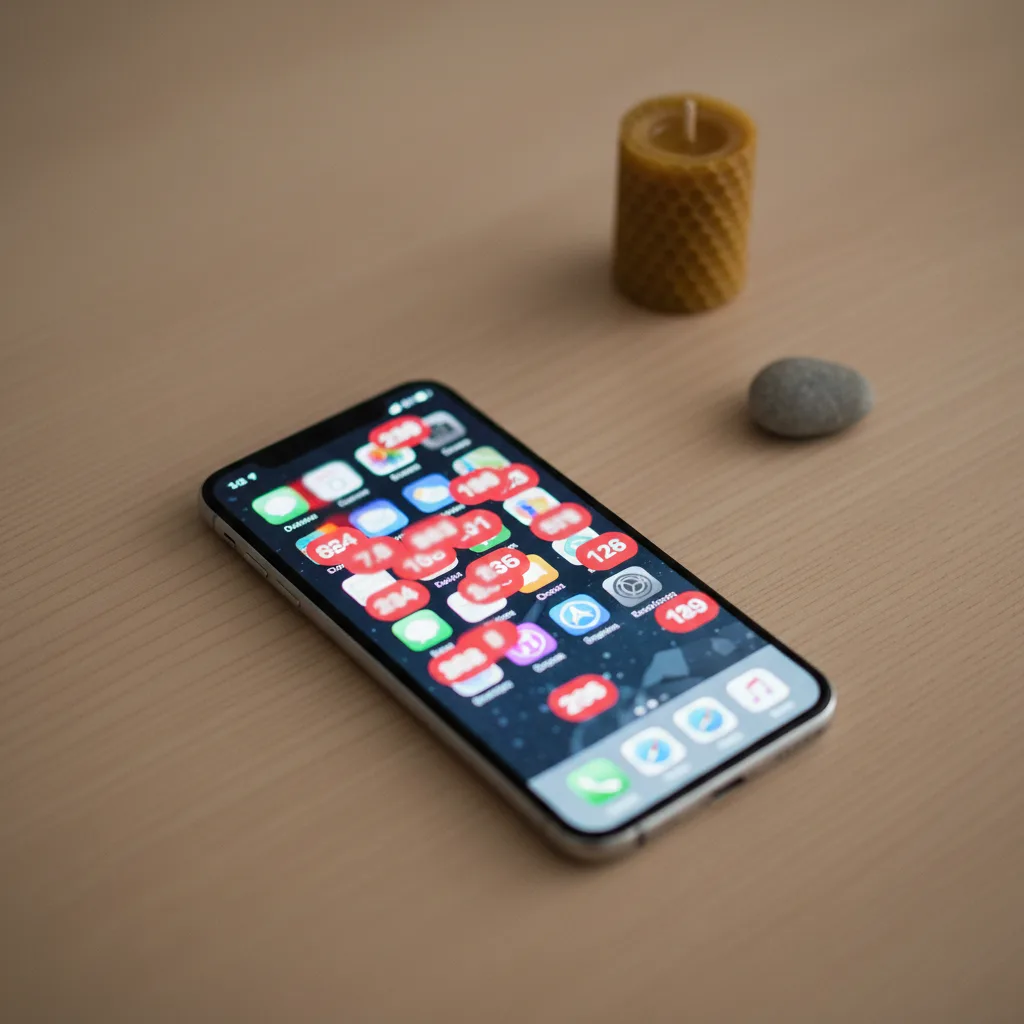
Notification anxiety represents a conditioned stress response. Research from the University of Sussex (2016) found that smartphone notifications, even when unread, produced significant increases in inattention, hyperactivity, and distraction symptoms. The mere awareness that notifications might arrive kept participants in a state of low-level vigilance — a sympathetic nervous system activation pattern that compounds over hundreds of daily interruptions.
Digital detox research reveals that the benefits are primarily cognitive rather than emotional. A 2019 study from the University of Pennsylvania found that five days without social media improved sleep quality and reduced loneliness but did not significantly affect anxiety levels. This suggests that digital detox addresses certain symptoms (sleep disruption, social comparison) while leaving underlying stress patterns intact, which is why it should be viewed as one component of a broader regulation strategy rather than a standalone solution.
The relationship between the mind and body in stress processing is best understood not as a one-way street but as a continuous feedback loop. Psychological stress produces physical symptoms (muscle tension, digestive disruption, cardiovascular changes), and those physical symptoms, in turn, generate psychological distress (anxiety about health, frustration with chronic symptoms, social withdrawal due to fatigue). Breaking this cycle requires intervention at the physical level, not just the cognitive level. This is why body-based approaches — breathwork, movement, cold exposure, and somatic practices — often succeed where purely cognitive approaches plateau.
AI anxiety — the stress and existential uncertainty triggered by rapid advances in artificial intelligence — represents a novel form of anticipatory threat that activates the nervous system's uncertainty-detection circuits. The anterior insula and dorsolateral prefrontal cortex, brain regions involved in uncertainty processing, show heightened activation during ambiguous threat scenarios. Research from the American Psychological Association's 2023 Stress in America survey found that 38% of adults reported anxiety about AI's impact on their job security, with the highest rates among workers aged 25-44.
The hypothalamic-pituitary-adrenal (HPA) axis is the primary neuroendocrine stress response system. When the hypothalamus detects a threat, it releases corticotropin-releasing hormone (CRH), which stimulates the pituitary gland to release adrenocorticotropic hormone (ACTH), which in turn triggers cortisol release from the adrenal glands. Chronic activation of this axis — as occurs in persistent stress — leads to HPA axis dysregulation, characterized by either chronically elevated cortisol or, paradoxically, blunted cortisol responses (as seen in burnout and certain trauma presentations).
The Science Behind It
Screen time affects the nervous system through multiple pathways. The blue light emitted by screens suppresses melatonin production, but the more significant impact is attentional: the rapid-fire stimulation of social media, news, and notifications keeps the brain in a state of sustained partial attention — a low-level sympathetic activation that prevents deep relaxation even when the content being consumed is not inherently stressful.
Digital detox research reveals that the benefits are primarily cognitive rather than emotional. A 2019 study from the University of Pennsylvania found that five days without social media improved sleep quality and reduced loneliness but did not significantly affect anxiety levels. This suggests that digital detox addresses certain symptoms (sleep disruption, social comparison) while leaving underlying stress patterns intact, which is why it should be viewed as one component of a broader regulation strategy rather than a standalone solution.
A growing body of research suggests that the most effective interventions are those that combine 'top-down' and 'bottom-up' approaches. Top-down interventions (cognitive therapy, psychoeducation, mindfulness) work through the prefrontal cortex to modulate subcortical stress responses. Bottom-up interventions (breathwork, movement, cold exposure, vagal stimulation) work directly on the autonomic nervous system, bypassing cognitive processing. Research from the Trauma Center at JRI in Boston has shown that individuals with severe dysregulation often benefit most from bottom-up approaches initially, with cognitive interventions becoming more effective once the nervous system has stabilized sufficiently to support reflective thinking.
Caffeine's relationship with anxiety is dose-dependent and highly individual, influenced by genetic variations in the CYP1A2 enzyme that metabolizes caffeine. Fast metabolizers (about 50% of the population) can consume moderate caffeine without significant anxiety effects, while slow metabolizers may experience jitteriness, increased heart rate, and panic-like symptoms from as little as 100mg (one cup of coffee). Research published in Neuropsychopharmacology (2005) found that caffeine at doses above 200mg significantly increased cortisol secretion in habitual consumers, challenging the common belief that tolerance eliminates caffeine's stress effects.
The nervous system doesn't care about your to-do list. It cares about one thing: are you safe right now?
How It Affects Your Nervous System
Digital minimalism, as articulated by Cal Newport, is not simply about reducing screen time but about intentionally selecting technologies that support your values while eliminating those that don't. A 2020 controlled trial at the University of Bath found that participants who followed a structured digital minimalism protocol for 30 days reported sustained improvements in focus, sleep quality, and self-reported well-being at 3-month follow-up — effects that outlasted the protocol itself because participants had developed new behavioral defaults.
Screen time affects the nervous system through multiple pathways. The blue light emitted by screens suppresses melatonin production, but the more significant impact is attentional: the rapid-fire stimulation of social media, news, and notifications keeps the brain in a state of sustained partial attention — a low-level sympathetic activation that prevents deep relaxation even when the content being consumed is not inherently stressful.
The vagus nerve's role extends far beyond what most popular accounts describe. In addition to its well-known effects on heart rate and digestion, the vagus nerve modulates the inflammatory reflex (reducing systemic inflammation), influences pain processing, regulates glucose metabolism, and even affects social cognition through its connections to facial muscles and middle ear structures involved in detecting prosodic (emotional) features of speech. Research from the Feinstein Institutes for Medical Research has demonstrated that electrical stimulation of the vagus nerve can reduce TNF-alpha (a key inflammatory cytokine) by up to 50%, which has led to FDA-approved vagus nerve stimulation devices for treatment-resistant depression and epilepsy.
Loneliness activates the brain's threat-detection circuitry. A landmark study published in Trends in Cognitive Sciences (2015) by John Cacioppo demonstrated that chronic loneliness produces a hypervigilance to social threat — lonely individuals show increased amygdala reactivity to negative social cues and reduced activity in the ventral striatum in response to positive social cues. This creates a self-reinforcing cycle: loneliness makes the brain more vigilant to rejection, which makes social interaction feel more threatening, which increases avoidance and isolation.
What the Research Shows
Phone addiction — or more accurately, problematic smartphone use — shares neurological features with behavioral addictions. Dopamine release occurs not when you check your phone but in anticipation of checking — the notification sound, the vibration, even the act of reaching for the device triggers a dopamine surge. This anticipatory reward mechanism is the same one exploited by slot machines and was deliberately engineered into social media platforms, as former Facebook and Google engineers have publicly acknowledged.
Digital minimalism, as articulated by Cal Newport, is not simply about reducing screen time but about intentionally selecting technologies that support your values while eliminating those that don't. A 2020 controlled trial at the University of Bath found that participants who followed a structured digital minimalism protocol for 30 days reported sustained improvements in focus, sleep quality, and self-reported well-being at 3-month follow-up — effects that outlasted the protocol itself because participants had developed new behavioral defaults.
The social dimension of regulation cannot be overstated. Humans are fundamentally social regulators — our nervous systems evolved in the context of close-knit social groups where safety was a collective, not individual, achievement. Research from the University of Virginia has demonstrated that holding a loved one's hand during a mildly stressful task reduces both subjective anxiety and neural threat responses (as measured by fMRI) compared to holding a stranger's hand or no hand at all. This effect is dose-dependent, with relationship quality predicting the magnitude of the calming effect. In an era of increasing social isolation, this research underscores the biological necessity of meaningful human connection.
One of the most underappreciated aspects of this research is the role of safety. The nervous system does not regulate in response to commands or willpower — it regulates in response to cues of safety. This is a fundamental insight from polyvagal theory: the ventral vagal system (which supports calm alertness and social engagement) activates only when the nervous system detects sufficient safety signals. These signals include prosodic voice patterns, warm facial expressions, physical touch, rhythmic movement, and predictable environments. Understanding this helps explain why some people cannot simply 'relax on command' — their nervous system has not received adequate safety cues to permit relaxation.
Common Misconceptions
Screen time affects the nervous system through multiple pathways. The blue light emitted by screens suppresses melatonin production, but the more significant impact is attentional: the rapid-fire stimulation of social media, news, and notifications keeps the brain in a state of sustained partial attention — a low-level sympathetic activation that prevents deep relaxation even when the content being consumed is not inherently stressful.
The work-from-home environment eliminates natural regulation cues that the nervous system relies on: the physical separation of home and work spaces, the commute as a transitional ritual, incidental social co-regulation with colleagues, and the variety of sensory environments throughout the day. Research from Microsoft's Human Factors Lab (2021) found that back-to-back video meetings without breaks caused stress-related beta wave activity to build steadily throughout the day, while brief breaks between meetings allowed for neurological recovery.
One practical implication of this research that is often overlooked is the importance of transitional rituals — deliberate practices that mark the boundary between different states of activation. The morning commute, the lunch break, the evening decompression — these transitional periods serve a neurological function by allowing the nervous system to shift between different modes of operation. The erosion of these boundaries in remote work culture, where the laptop opens on the nightstand and closes on the couch, has eliminated many of the natural regulation points that previously structured the day. Deliberately creating transitional rituals (a 10-minute walk between work and dinner, a specific 'shutdown' routine at end of work, different physical spaces for different activities) can significantly improve nervous system regulation even without adding formal 'practices.'
Adaptogens — a class of herbs including ashwagandha, rhodiola rosea, and holy basil — are defined by their ability to normalize physiological function during stress. A 2012 systematic review in Pharmaceuticals found that ashwagandha (Withania somnifera) reduced serum cortisol by an average of 30% in stressed adults. However, the evidence quality remains mixed: many studies have small sample sizes, short durations, and potential conflicts of interest from supplement manufacturers. The most robust evidence supports ashwagandha and rhodiola, while many other marketed adaptogens lack rigorous clinical data.
The average person touches their phone 2,617 times per day. Each touch involves a micro-decision that depletes cognitive resources. A simple lock screen reminder ('Is this intentional?') can reduce unconscious phone checking by up to 40%.
Practical Applications
Digital detox research reveals that the benefits are primarily cognitive rather than emotional. A 2019 study from the University of Pennsylvania found that five days without social media improved sleep quality and reduced loneliness but did not significantly affect anxiety levels. This suggests that digital detox addresses certain symptoms (sleep disruption, social comparison) while leaving underlying stress patterns intact, which is why it should be viewed as one component of a broader regulation strategy rather than a standalone solution.
Social comparison on Instagram and similar platforms triggers a specific neural response. Research using fMRI at the University of California (2020) showed that viewing idealized images of peers activated the ventral striatum (reward processing) simultaneously with the anterior cingulate cortex (social pain processing), creating a unique neurological experience of simultaneous desire and inadequacy. This dual activation explains why social media can feel simultaneously compelling and distressing.
One of the most underappreciated aspects of this research is the role of safety. The nervous system does not regulate in response to commands or willpower — it regulates in response to cues of safety. This is a fundamental insight from polyvagal theory: the ventral vagal system (which supports calm alertness and social engagement) activates only when the nervous system detects sufficient safety signals. These signals include prosodic voice patterns, warm facial expressions, physical touch, rhythmic movement, and predictable environments. Understanding this helps explain why some people cannot simply 'relax on command' — their nervous system has not received adequate safety cues to permit relaxation.
Co-regulation — the process by which one person's regulated nervous system helps another person regulate — is not limited to parent-child relationships. Research from the University of Virginia (2020) demonstrated that romantic partners' cortisol levels synchronize within 20 minutes of physical proximity. Similarly, studies of group breathwork sessions show collective heart rate variability coherence, suggesting that nervous system states are genuinely contagious.
The freeze response, often overlooked in popular discussions of stress, represents the nervous system's last-resort protective mechanism. When fight or flight are not viable options, the dorsal vagal complex triggers a shutdown response — heart rate drops, muscles go limp, and consciousness may become foggy or dissociated. This response evolved to minimize pain during inescapable threat but can become chronically activated in individuals with complex trauma histories.
The Mind-Body Connection
Social comparison on Instagram and similar platforms triggers a specific neural response. Research using fMRI at the University of California (2020) showed that viewing idealized images of peers activated the ventral striatum (reward processing) simultaneously with the anterior cingulate cortex (social pain processing), creating a unique neurological experience of simultaneous desire and inadequacy. This dual activation explains why social media can feel simultaneously compelling and distressing.
Digital minimalism, as articulated by Cal Newport, is not simply about reducing screen time but about intentionally selecting technologies that support your values while eliminating those that don't. A 2020 controlled trial at the University of Bath found that participants who followed a structured digital minimalism protocol for 30 days reported sustained improvements in focus, sleep quality, and self-reported well-being at 3-month follow-up — effects that outlasted the protocol itself because participants had developed new behavioral defaults.
One of the most underappreciated aspects of this research is the role of safety. The nervous system does not regulate in response to commands or willpower — it regulates in response to cues of safety. This is a fundamental insight from polyvagal theory: the ventral vagal system (which supports calm alertness and social engagement) activates only when the nervous system detects sufficient safety signals. These signals include prosodic voice patterns, warm facial expressions, physical touch, rhythmic movement, and predictable environments. Understanding this helps explain why some people cannot simply 'relax on command' — their nervous system has not received adequate safety cues to permit relaxation.
Somatic experiencing, developed by Peter Levine, is based on the observation that wild animals routinely discharge stress energy through physical movement — shaking, trembling, running — and rarely develop trauma-like symptoms. Humans, by contrast, often suppress these natural discharge mechanisms due to social conditioning. Somatic experiencing works by gently guiding individuals to complete interrupted defensive responses and discharge accumulated survival energy from the body.
The hormonal stress response in women involves additional complexity beyond the HPA axis. Estrogen and progesterone modulate cortisol sensitivity, serotonin production, and GABA receptor function, which is why stress symptoms often fluctuate across the menstrual cycle. Research published in Biological Psychiatry (2018) found that women in the luteal phase (post-ovulation) showed heightened amygdala reactivity to threatening stimuli and reduced prefrontal regulation — essentially creating a window of increased vulnerability to anxiety and stress.
Who Benefits Most
AI anxiety — the stress and existential uncertainty triggered by rapid advances in artificial intelligence — represents a novel form of anticipatory threat that activates the nervous system's uncertainty-detection circuits. The anterior insula and dorsolateral prefrontal cortex, brain regions involved in uncertainty processing, show heightened activation during ambiguous threat scenarios. Research from the American Psychological Association's 2023 Stress in America survey found that 38% of adults reported anxiety about AI's impact on their job security, with the highest rates among workers aged 25-44.
Screen time affects the nervous system through multiple pathways. The blue light emitted by screens suppresses melatonin production, but the more significant impact is attentional: the rapid-fire stimulation of social media, news, and notifications keeps the brain in a state of sustained partial attention — a low-level sympathetic activation that prevents deep relaxation even when the content being consumed is not inherently stressful.
A nuanced understanding of the stress response includes recognizing that not all stress is created equal. Acute, time-limited stress followed by recovery (eustress) actually strengthens the nervous system's regulatory capacity through a process called hormesis — similar to how exercise stresses muscles to make them stronger. The problem arises with chronic, unrelenting stress that prevents recovery, or with traumatic stress that overwhelms the system's capacity to process. This distinction matters for practical decision-making: avoiding all stress is neither possible nor beneficial. The goal is to ensure adequate recovery between periods of activation and to avoid sustained activation without relief.
Sleep remains the single most potent nervous system regulation intervention available, yet it is consistently the most neglected. During sleep — particularly during slow-wave and REM stages — the brain undergoes critical maintenance processes: clearing metabolic waste through the glymphatic system, consolidating memories, processing emotional experiences, recalibrating stress hormones, and repairing cellular damage. The research is unequivocal: there is no aspect of physical or mental health that is not impaired by insufficient sleep, and no amount of other regulation practices can compensate for chronic sleep deprivation. Prioritizing sleep is not optional — it is the foundation upon which all other regulation efforts rest.
Getting Started: A Step-by-Step Guide
AI anxiety — the stress and existential uncertainty triggered by rapid advances in artificial intelligence — represents a novel form of anticipatory threat that activates the nervous system's uncertainty-detection circuits. The anterior insula and dorsolateral prefrontal cortex, brain regions involved in uncertainty processing, show heightened activation during ambiguous threat scenarios. Research from the American Psychological Association's 2023 Stress in America survey found that 38% of adults reported anxiety about AI's impact on their job security, with the highest rates among workers aged 25-44.
Social comparison on Instagram and similar platforms triggers a specific neural response. Research using fMRI at the University of California (2020) showed that viewing idealized images of peers activated the ventral striatum (reward processing) simultaneously with the anterior cingulate cortex (social pain processing), creating a unique neurological experience of simultaneous desire and inadequacy. This dual activation explains why social media can feel simultaneously compelling and distressing.
A nuanced understanding of the stress response includes recognizing that not all stress is created equal. Acute, time-limited stress followed by recovery (eustress) actually strengthens the nervous system's regulatory capacity through a process called hormesis — similar to how exercise stresses muscles to make them stronger. The problem arises with chronic, unrelenting stress that prevents recovery, or with traumatic stress that overwhelms the system's capacity to process. This distinction matters for practical decision-making: avoiding all stress is neither possible nor beneficial. The goal is to ensure adequate recovery between periods of activation and to avoid sustained activation without relief.
Recent advances in wearable technology have made it possible for individuals to track their own nervous system state in real time. Devices measuring HRV, electrodermal activity (skin conductance), and continuous heart rate provide biofeedback that was previously available only in clinical settings. Research from the University of Zurich (2020) found that HRV biofeedback training — where individuals learn to increase their HRV in real time using visual or auditory feedback — produced significant improvements in anxiety, depression, and stress resilience that were maintained at six-month follow-up. While these tools are not replacements for professional care, they democratize access to physiological self-awareness.
Sources & Further Reading
- Twenge, J.M. (2019). More time on technology, less happiness? Associations between digital-media use and psychological well-being. Current Directions in Psychological Science, 28(4), 372-379.
- Loh, K.K., & Kanai, R. (2014). Higher media multi-tasking activity is associated with smaller gray-matter density in the anterior cingulate cortex. PLoS ONE, 9(9), e106698.
- Newport, C. (2019). Digital Minimalism: Choosing a Focused Life in a Noisy World. Portfolio.
- Ward, A.F., et al. (2017). Brain drain: The mere presence of one's own smartphone reduces available cognitive capacity. Journal of the Association for Consumer Research, 2(2), 140-154.
- Stothart, C., Mitchum, A., & Yehnert, C. (2015). The attentional cost of receiving a cell phone notification. Journal of Experimental Psychology: Human Perception and Performance, 41(4), 893-897.